FIELD NOTES BLOG

Wildlife at Elliot

Lauren Bonavia
February 26, 2026

Rewilding the Former Elliot Golf Course

Throughout the restoration planning of the former Elliot Golf Course, one goal is providing high-quality habitat for native wildlife by restoring prairie, hardwood savanna, and wetland ecosystems. Doing so provides benefits to wildlife, waterways, and humans.

Prairie Restoration

The previous state of the golf course was a turfgrass monoculture, requiring expensive and timely maintenance for little biological payout. To prepare the land, Severson Dells partnered with a local farmer to use commercial agricultural techniques to ‘reset’ the landscape. Planting corn flushes undesirable non-native plants, and primes the soil for its transition to prairie. 


Prairie habitat
has faced steady declines in Illinois, so we aim to increase this available habitat to wildlife. Seeding native grasses and wildflowers will benefit animals like mice, voles, songbirds, and pollinators by providing food resources and protective shelter, and in turn, feed animals like raptors, foxes, and snakes!
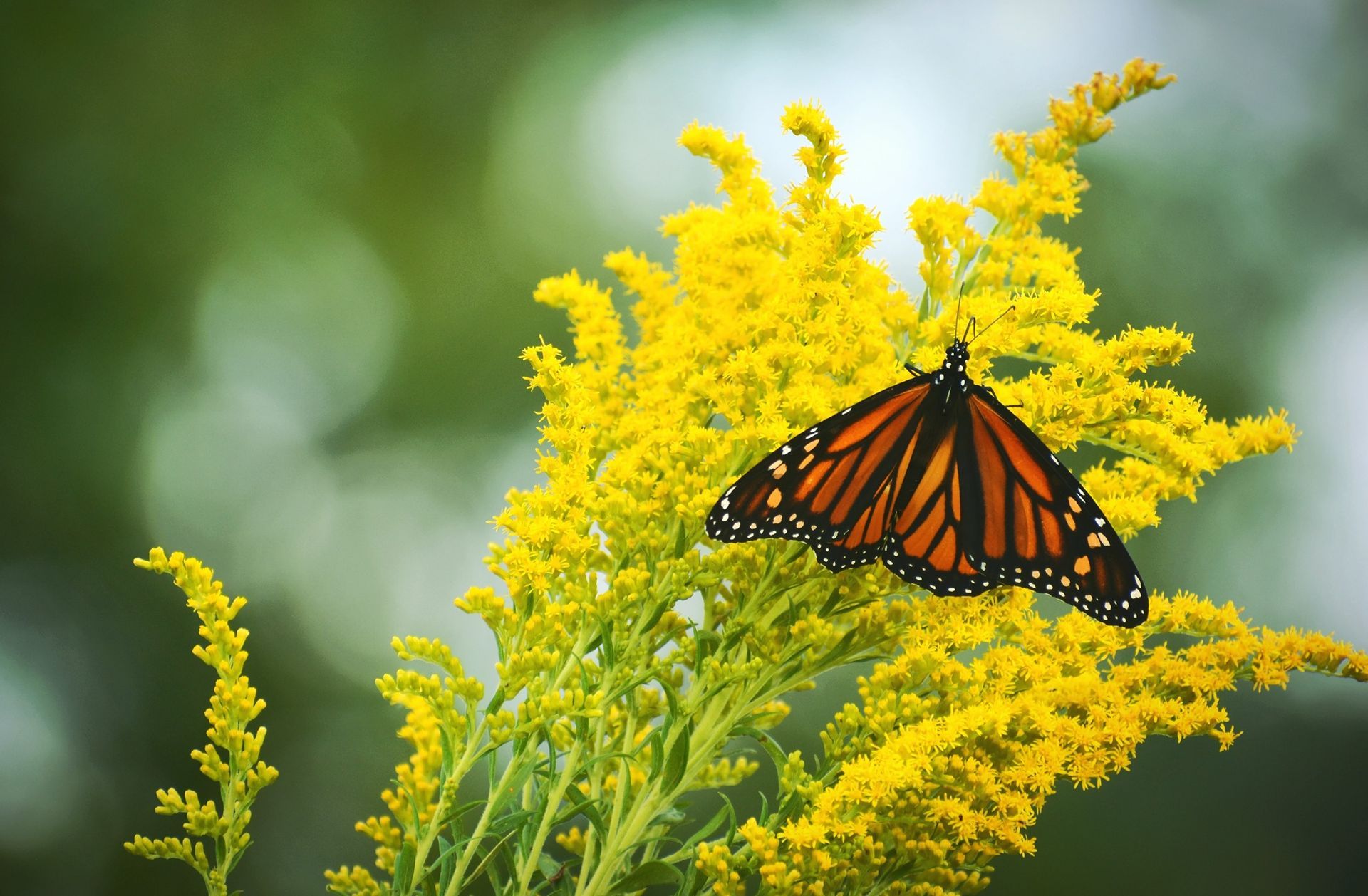
Monarch butterfly pollinating goldenrod flowers.

Wetland Restoration

To control flooding, humans often channel and culvert water in urban areas, as was the fate of Manning Creek. Unfortunately, this reduces the benefits of the creek as habitat and a natural filter. To reverse the disruption of this system, we are daylighting, or unburying the creek. We will encourage meandering, or the S-shaped curves that follow a stream channel, to increase the amount of bank available for plant growth. The vegetation will stabilize bank soil and provide shelter and clean water for waterbirds, fish, amphibians, and other animals at Elliot - not to mention the entire Kishwaukee Watershed!
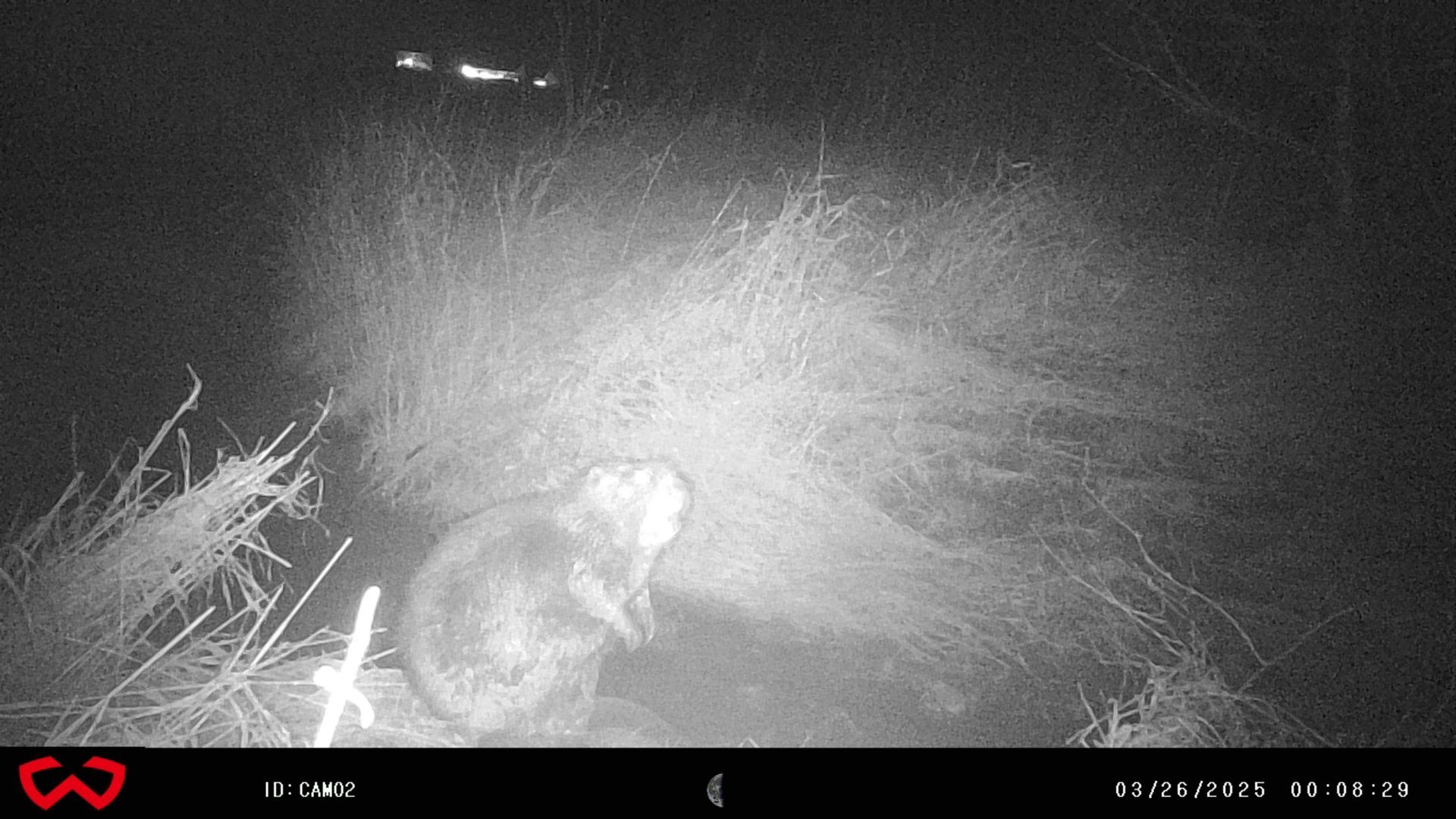
Trail camera photo showing a North American Beaver in a creek at night.

Celebrity sighting? A beaver has been documented in Manning Creek! This is exciting because beavers have important roles as ecosystem engineers and keystone species. Beavers are called ‘ecosystem engineers’ because of their instincts to control flowing water and create wetlands, and ‘keystone’ is a designation given to species that disproportionately impact their environment by creating habitat for other animals, like the wetland-loving Wilson’s Snipe! 

Savanna Restoration

Similar to prairie, a savanna is a grassland with scattered hardwood (deciduous) trees. Initial restoration actions included the removal of non-native tree species, with plans to plant native oak and hickory. These masting trees will support the diets of squirrels, deer, songbirds, and turkey, among others. Over time, holes in these trees will make homes for cavity-dwelling owls, bats, wood ducks, and lots of other birds and mammals!

The Big Picture: Addressing concern, Coming together, and Sharing the Land

It may be scary to think about sharing your neighborhood with predators like coyotes, snakes, and owls; However, these are important players in a healthy ecosystem. Animals search elsewhere when their resource needs aren't met, so by providing high-quality habitat, we are effectively containing animals to an area. Animals should not be dependent on human resources and should fear people, so please refrain from feeding wildlife for both human and animal safety and well-being. Biodiversity in your neighborhood is a trophy - not something to fear.

Parting thoughts

This project is intended to benefit wildlife, waterways, and humans. Severson Dells’ goal is to provide habitat for wildlife already living here, and to draw in new species in, because everything benefits from biodiversity and green spaces. Increasing available habitat (particularly in urban areas) combats habitat fragmentation, a looming threat to many wildlife species. 


At our inaugural
Fore the Prairie event in January, attendees awed at a juvenile bald eagle soaring over the launching of prairie seed golf balls, its presence symbolizing what's to come in rewilding the site.

Sources

RECENT ARTICLES

By Emma Zimmerman February 24, 2026
For those who may not know me, I previously spent two wonderful years here at Severson Dells working in environmental education and community science, helping our community connect with the land in meaningful ways. I am so excited to announce that I am back at the nature center for the next few months! In this role, I’ll be leading all things Science Communication, so be on the lookout for educational blogs, behind-the-scenes restoration updates, and social media posts that (hopefully) make ecology feel a little less intimidating and a lot more exciting.
By education2.americorps February 18, 2026
Have you ever looked around and wondered about grass? It may not seem like there’s much to notice about the common golf course, front lawn, sidewalk adjacent sort of grass we see everyday, but if you look below the surface there’s a whole world and history. These often monochromatic, sprawling green landscapes are planted with what is referred to as turf grass, such as Kentucky blue grass, a plant imported to the United States from Europe and North Africa. This style of lawn design was brought to the U.S. from Europe during the 1700s, where long expanses of short green grasses were associated with the manicured country estates of the wealthy and upper social classes. The popularization of this cultural import co-occurred and played a role in the development of U.S. suburban culture in the late 1800s, strengthening through the mid-20th century when it became more widely actionable for people in the middle class. Turf grass now covers app. 40 million acres across the country(an area larger than the whole of Illinois). The planting of monoculture grass areas like this, where there are long stretches of only one kind of plant, came in contrast to the landscapes that grew for millenia on the place we now call the United States. These ancient landscapes were full of biodiversity, and in many areas housed ecosystems where humans functioned as just one part of a balanced set of biological processes. In Illinois specifically, native grasslands–in this region called prairies–used to cover 21 of Illinois’ 36 million acres on their own. Prairies in Illinois formed (and the .01% that still remain still form) unique and powerful living systems. Not only do they create a safe home for many animal species to go about their lives, their root systems push through soil to notable depths, with an average length between 5-15 feet, whereas the turf grass lawns discussed above have roots not digging more than 3-4 inches into the earth. The impact of these root systems is profound, creating long pathways for water absorption, microbial and mycelial growth, and the draw down of excess carbon from the atmosphere back into the earth. One acre of restored prairie can sequester(take out of the air and store in root systems) 1 ton of carbon a year, and absorb 65% more stormwater–or water left on the ground after it rains–than turf grass. The transformation of turf grass back to prairie has profound positive impacts on surrounding ecosystems. The restoration project at Elliot golf course will provide a prime example for residents of this region to watch as the land begins to come alive with the myriad colors, animals, and landscape benefits of a prairie in just a few years. Sources: https://www.sustainablewoodstock.org/a-history-of-the-american-lawn/ https://blog.nwf.org/2024/04/why-we-have-lawns/ https://www.fs.usda.gov/r09/midewin/natural-resources/forest-management https://www.chicagobotanic.org/blog/plant-science-conservation/lowdown-prairie https://www.chicago.gov/city/en/depts/water/supp_info/conservation/green_design/natural_landscaping.html https://files.dnr.state.mn.us/assistance/nrplanning/community/roadsidesforwildlife/putdownroots_poster.pdf https://www.onlyraindownthedrain.com/kids/ https://www.nature.com/articles/s41467-024-46991-5?fromPaywallRec=false
By Olivia Price February 18, 2026
Rivers move and snow falls and hillsides weather while tectonic plates settle snugly across the crust of our earth. The wind blows and trees bow down on stormy days, and deep under our feet the molten parts of our planet’s body flow, as above our heads we see the wispy clouds marking the flow of airs of our sky swirling just the same. Just beyond these skies we see the moving pinpricks and round splotches of light which cross our eyelines through each daily cycle, marking just one of the myriad multiscale rotations of our planet, solar system, and galaxy.