FIELD NOTES BLOG
May Climate News: Could 2026 Be One of The Hottest on Record? Scientists Think So.
If March felt unusually warm where you live this year, you weren’t imagining it. March 2026 wasn’t just the warmest March on record in the United States;
it was the most abnormally warm month ever recorded in the lower 48 states, according to National Oceanic and Atmospheric Administration
data. That means no other month in our recorded history has ever been this far above average. On average, temperatures across the country reached approximately 50.85°F, which is 9.35°F above what’s considered normal for March based on 20th-century data. What is even more concerning is that the entire year leading up to it, from April 2025 through March 2026, was the warmest 12-month period ever recorded in the continental United States. This news should be sounding alarms everywhere.
Scientists are predicting that this abnormally warm spell may be a preview of what’s coming next, both later this year and into next. Driven by a strengthening “super” El Niño, coupled with an already warmer than usual climate, 2026 is projected to be among the hottest years ever, with potential for further records to be broken.
What is El Niño?
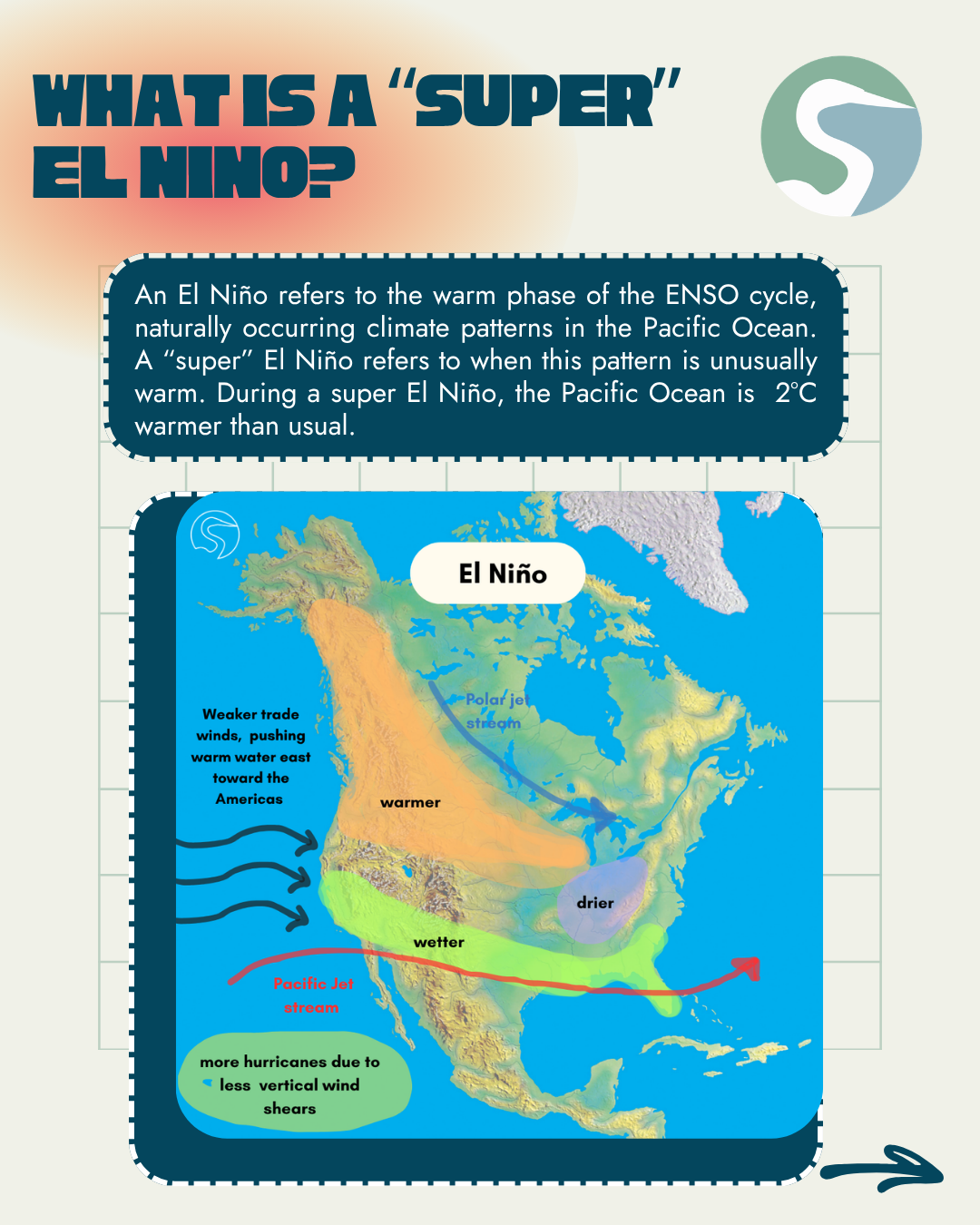
You may have heard the term El Niño in the news, especially when people talk about unusual weather, but what exactly is it? El Niño, and its opposite, La Niña, are natural climate patterns in the Pacific Ocean that impact weather worldwide. The El Niño-Southern Oscillation (ENSO) cycle is an oscillating weather pattern where ocean temperatures in the tropical Pacific alternate between warm (El Niño), cold (La Niña), and neutral phases, referred to as ENSO-neutral. La Niña or El Niño events occur irregularly every 3-7 years and break these normal conditions. These effects can last 9-12 months, but sometimes they can last for years. Though they are inconsistent, El Niño typically occurs more often than La Niña. Both phenomena tend to peak during the Northern Hemisphere winter.
A simple way to picture this event is to imagine the Pacific Ocean as one huge bathtub. Sometimes, warm water sloshes toward the eastern side (El Niño), bringing warm waters towards the western coast of the Americas. Other times, it shifts back towards the west (La Niña), bringing those warm waters towards Asia, and cooler waters towards the West coast of the Americas. That movement of warm water might not sound like a big deal, but it affects
weather patterns across the entire planet. While it’s not the only factor influencing weather, ENSO events often make a noticeable impact on winters in the United States, both temperature and precipitation wise, affecting everything from hurricane seasons to wildfire seasons, ecosystem assembly, and even global economies.
What is so special about this El Niño:
Not all El Niño events are the same, with some having a much larger impact on global weather events than others. An El Niño is formed when the Pacific Ocean is 0.5°C (0.9 °F) warmer than normal. A “super” El Niño occurs when average sea surface temperatures in the Pacific rise at least 2°C (3.6 °F). These kinds of super El Niño events don’t happen very often. Since 1950, there have only been a handful, with the most recent occurring from 2015 to 2016. Scientists still aren’t certain whether an El Niño will occur this year, but the likelihood is increasing, with the National Oceanic and Atmospheric Administration (NOAA) predicting a 61% chance of an El Niño developing between May and July 2026, and a one-in-four chance that it might be a super El Niño. Both NOAA and European agencies are forecasting this El Niño to be well above 2°C, which may very likely set new records from the last super El Niño event in 2015 and 2016.
How Does El Niño Make the Planet Warmer?
The ocean plays a crucial role in mediating Earth’s climate. The ocean stores heat, and a lot of it, absorbing over
90% of excess heat trapped by greenhouse gases. During an El Niño event, that stored heat gets released from the ocean into the atmosphere. It doesn’t happen instantly, however, and it takes a few months to fully show up in global temperatures, says Northern Illinois University meteorology professor
Victor Gensini.
Super El Niños can trigger a "climate regime shift," which pushes normal climatic conditions into different patterns for years or sometimes decades, according to a study last December in the journal
Nature Communications. The study found that after the 2015-2016 super El Niño, the Gulf of Mexico jumped to a new sustained level of warmth that may have contributed to stronger hurricanes along the Gulf Coast in the years after. Since then, the past 10 years have already been the hottest on record. Though certainly not the only contributing factor, El Niño releases heat stored in the ocean back into the atmosphere, which causes global average surface temperatures to rise. A strong El Niño, coupled with rising global temperatures, is predicted to set new records for the warmest year in 2026 or 2027.
Impacts this El Niño Could have:
One of the most important things to understand about El Niño is that it doesn’t affect every place the same way. Instead, it shifts where heat and rainfall go around the planet. Some places that are usually dry may suddenly get a lot of rain, while places that depend on steady rainfall can end up much drier than normal. These shifts have wide-reaching impacts around the globe. During a strong El Niño, the Atlantic hurricane season is often quieter, while the Pacific may see more storms. Here in the United States, the pattern often splits the country, with the South tending to be cooler and wetter, while northern areas are often warmer than average.
Dramatic shifts in rainfall are a major concern for agriculture, especially in regions that rely on consistent seasonal rains. When these places suddenly find themselves without rain, it makes it much harder to grow food. Even though we’ve gotten much better at growing and transporting food, there is still a real risk of crop failures in some parts of the world when those patterns change. All of this is happening on top of other global pressures, such as increased prices of fertilizer and gas fueled by conflicts in the middle east, which can make the impacts even more complicated.
In Conclusion:
Right now, scientists are watching the Pacific Ocean closely, and although a developing El Niño isn't certain, the chances are growing, and this event could amplify the warming we’re already seeing. Events like El Niño have always been part of Earth’s natural system, but today, they’re unfolding in a world that is already warmer than it used to be. That means their impacts on temperature, rainfall, and extreme weather can be stronger, less predictable, and sometimes more disruptive than they were not that long ago in the past.
As we continue to experience more severe climatic events such as this, it’s a reminder of how interconnected our planet is, and how much we are still learning about the impacts of living in a changing climate. What happens in one part of the ocean ripples outward, shaping weather patterns across the globe and influencing everything from the food we grow to the seasons we experience here at home in the Midwest, even thousands of miles away from the Pacific Ocean.
Understanding these patterns is one of the most important tools we have. The more we learn, the better we can prepare, adapt, and make informed decisions about how we care for our environment. As we move through 2026 and into 2027, this developing El Niño will be something scientists continue to watch closely. Events like these are not just important for what records are broken, but about what these changes are telling us about the future of our climate, and the role we all play in shaping it.
Sources:
CNN: A Super El Niño is coming. Here’s how a hotter ocean could change the weather near you
CNN: The first predictions for hurricane season are in and El Niño’s fingerprints are all over it
NPR News: Scientists call another near-record hot year a 'warning shot' from a shifting climate
PBS News: The U.S. smashed heat records in March. Just wait for El Niño this summer
NOAA: Climate Prediction Center
NOAA: How Does the Ocean Affect Climate and Weather On Land?
RECENT ARTICLES