Community Science
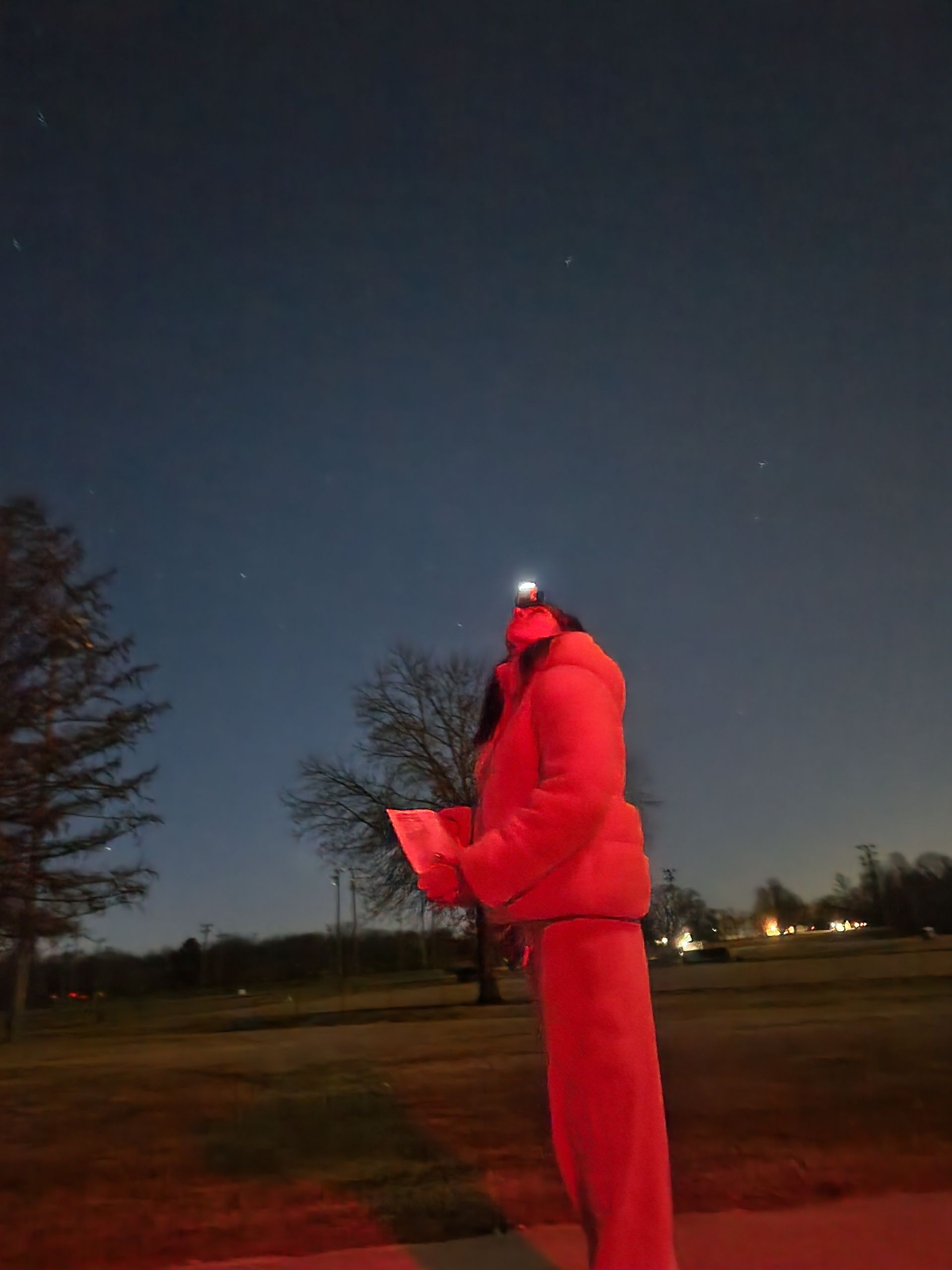
Community Science empowers communities to ask their own scientific questions about what is happening in your backyard. At Wild Roots, Community Science is a collaboration with local volunteers to contribute to regional, national, and international biodiversity surveys and studies with partner organizations.
Our community is abundant with undiscovered or underreported aspects of nature, and you can help! Join Community Science to collect valuable data to help us better understand our natural world, inform resource and land management efforts, and improve upon our understanding of sustainability, conservation, and preservation.
Community Science projects offers a wide variety of participation models with varying levels of time commitment, experiences, and interests accommodated. All projects also include training to work with any schedule.
Scroll down to learn more about our current Community Science projects and how you can get involved.
Current Projects
Our Community Science projects vary throughout the year. Below are the projects we, along with volunteers, are working to collect data towards.
City Nature Challenge
The City Nature Challenge is a worldwide movement to document nature and help fight biodiversity loss, coordinated by California Academy of Science and the Los Angeles Natural History Museum! Every observation you make of WILD nature is a data point that helps scientists understand and protect nature for all of us.
Locally, we organize the Rock River Valley Team, which is comprised of observations made is Winnebago, Boone, Ogle, DeKalb, and Stephenson Counties.
City Nature Challenge takes place from April 24 - May 10 and ANYONE can participate! To learn more, visit the City Nature Challenge page!
Calling Frog Surveys
During frog mating season, we collect auditory data, such as frog calls, in conjunction with Peggy Notebaert Nature Museum of the Chicago Academy of Sciences. The data collected helps us better understand local frog species, their distribution, and responses to land management efforts.
Data is taken during a few different windows corresponding to different frog species' mating seasons, which span from late February through June.
To get involved with our frog monitoring, scroll down and submit the interest form.
Bat Surveys
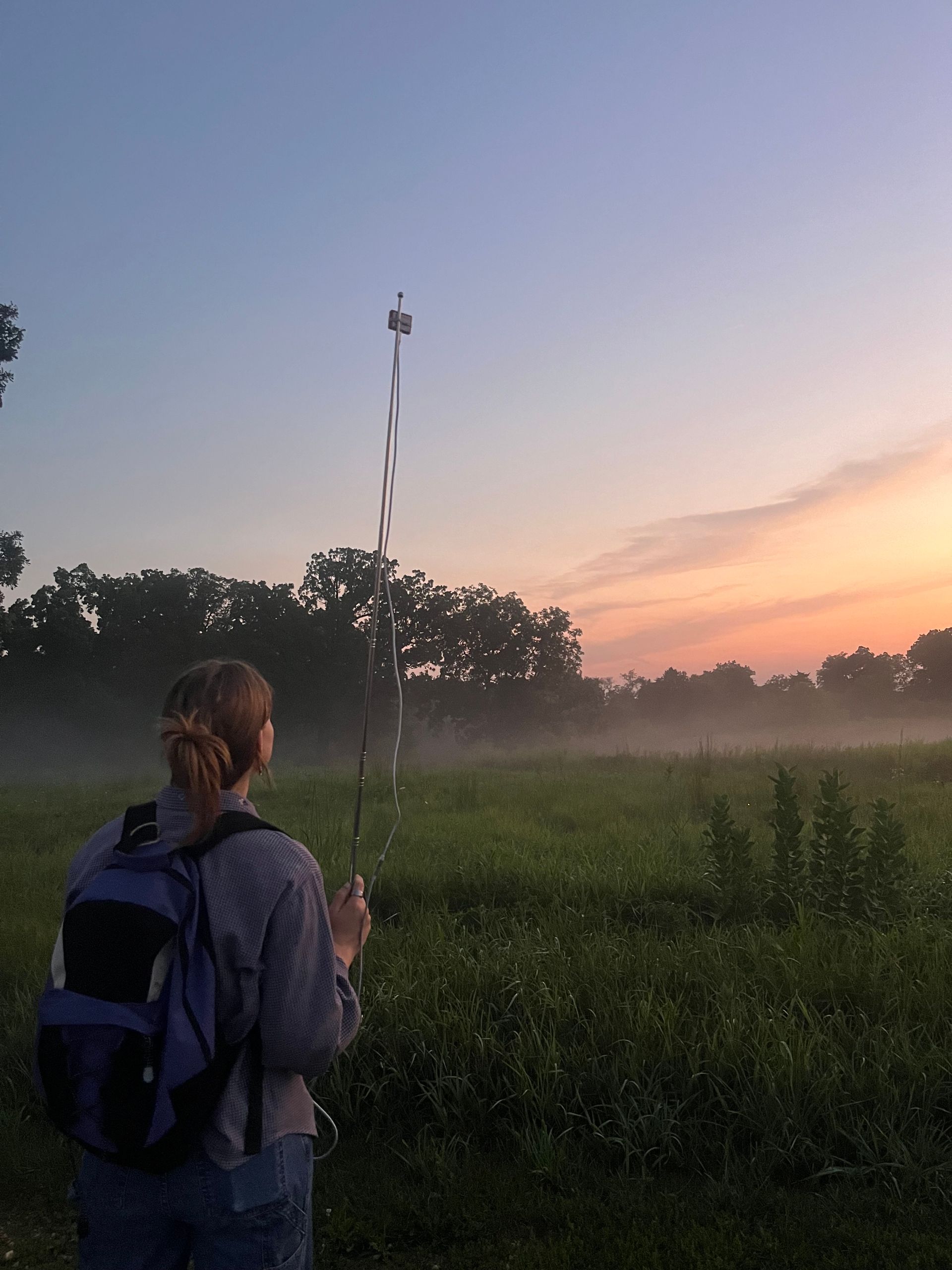
From Spring through Fall, we survey bat populations. These surveys are extremely important as we have multiple species of bats that are threatened or endangered in Winnebago County.
Data collected is used to help organizations better utilize land for bat habitat management, and thus improve conservation for these threatened or endangered species. Our efforts are guided by Midwest Bat Working Group, which aims to conserve midwestern bat species and their habitats.
To get involved with our bat monitoring, scroll down and submit the interest form.
Bumblebee Monitoring
Through the University of Illinois, we participate in Bee Spotter, to collect data on Bumblebees. Data collected contributes to scientists' understanding of population status and distributions of bees, such as the critically endangered Rusty-Patch Bumblebee.
Data is collected when bee populations are present, especially during pollination season.
To get involved with our Bumblebee Monitoring, scroll down and submit the interest form.
Budburst Plant Monitoring
Budburst involves observing and reporting on plant species and phenology. Plant phenology lets us know how seasonal changes in temperature, rainfall, and day length affects our native plant species.
This data is contributed to Chicago Botanic Garden and is used by scientists to determine how climate and ecosystems are changing and predict how they will continue to change.
To get involved with Budburst, scroll down and submit the interest form.
Water Quality Monitoring
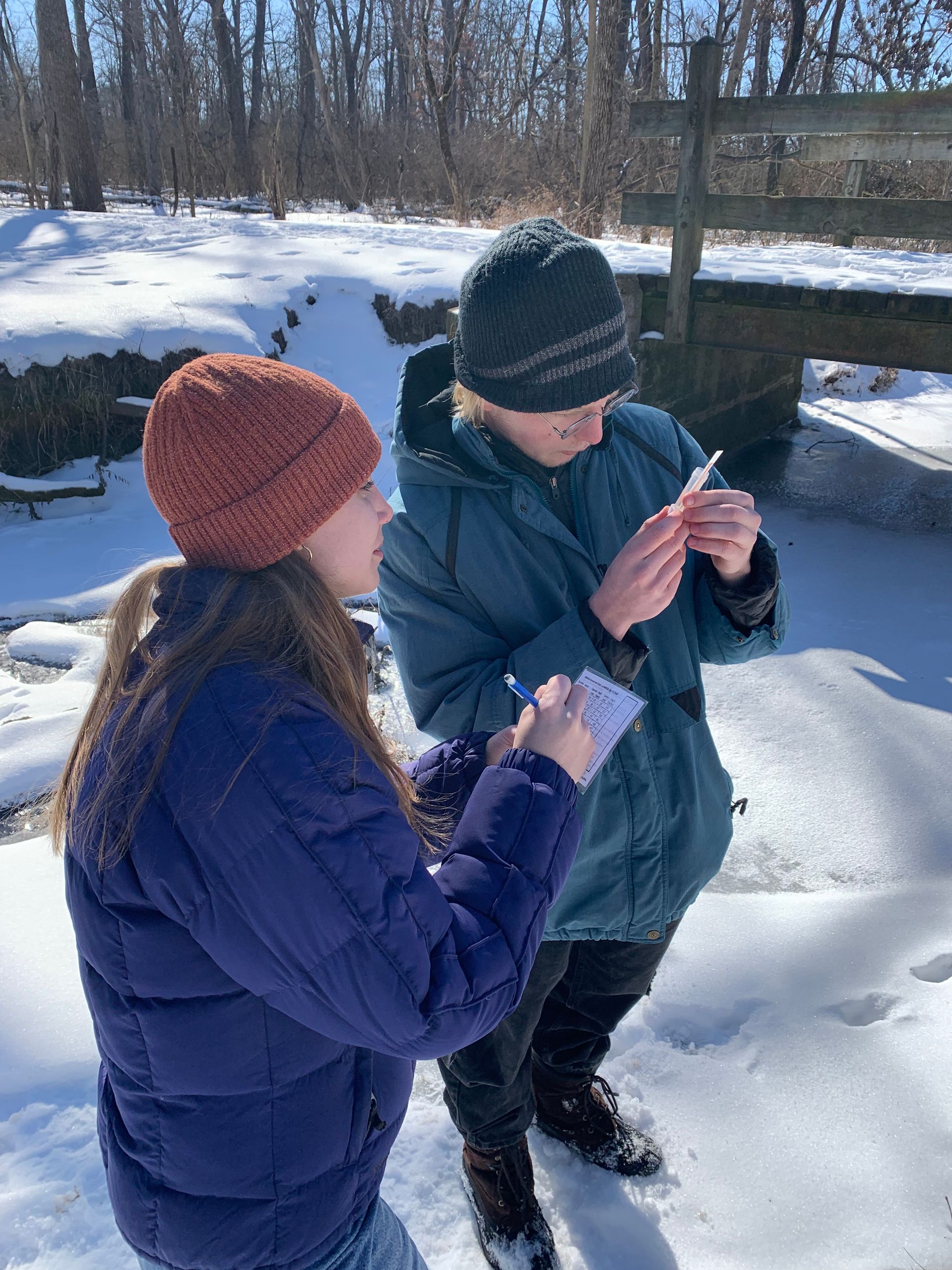
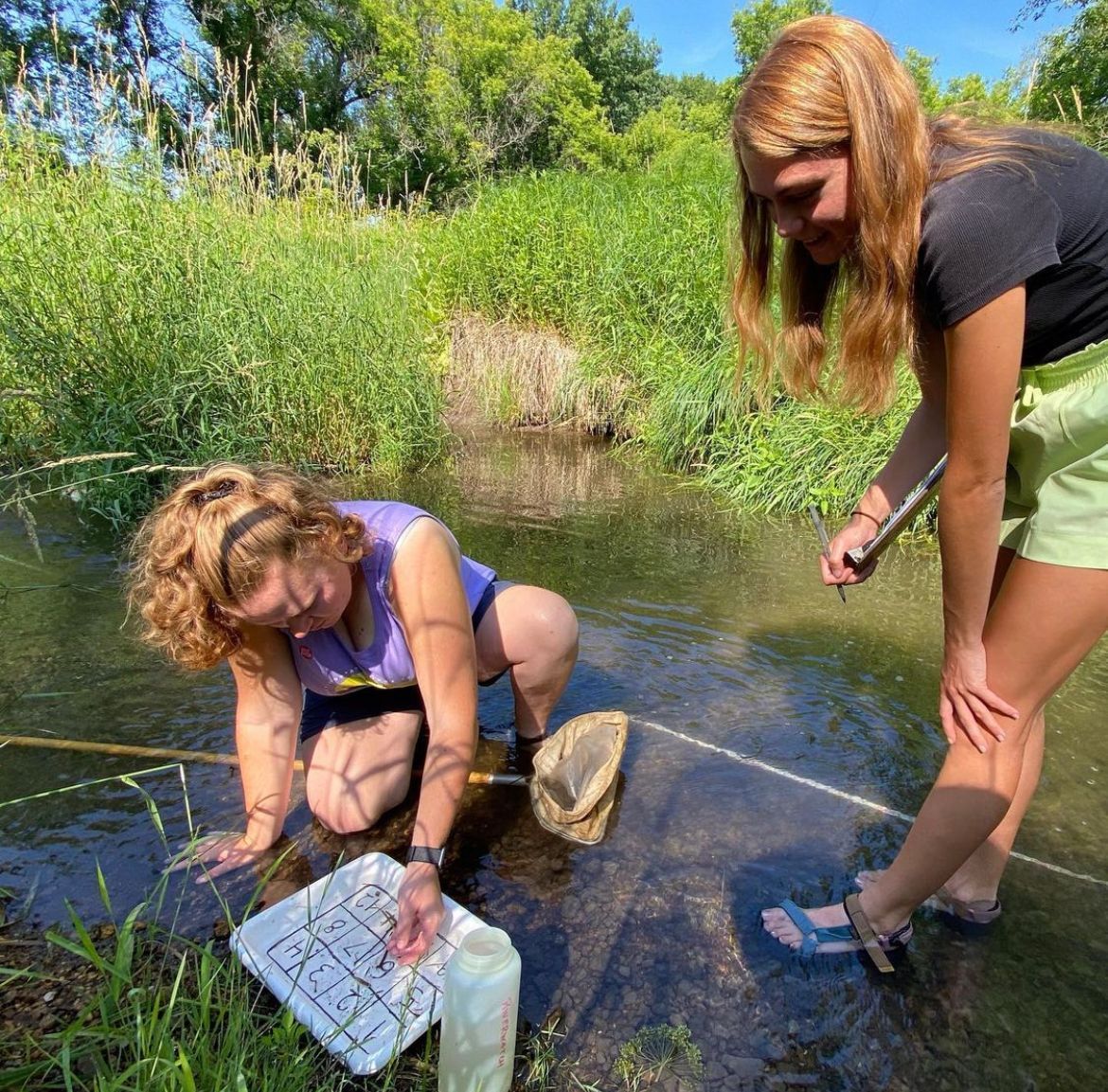
Throughout the year, we monitor the quality of water sources throughout a variety of different projects. This data helps inform us on the safety of being in our creek during camps, as well as informs us on concentrations of chloride and other pollutants that may be in our water sources.
When applicable, data is shared with researchers and local agencies to better understand water quality within our region.
To get involved in monitoring water quality, scroll down and submit the interest form.