
FIELD NOTES BLOG
Tick Guide: How to Stay Safe During Tick Season
As the weather warms and we spend more time outdoors, so do our other far from welcome companions: ticks! Over the past few decades, tick populations and their geographic range have expanded in northern Illinois. We’re now encountering more ticks than before, and a greater number of them carry diseases. This isn’t a reason to avoid going outside, but it is something we should all be aware of and prepared for as we inevitably encounter them this summer. Consider this your guide to staying safe during tick season.
What are ticks:
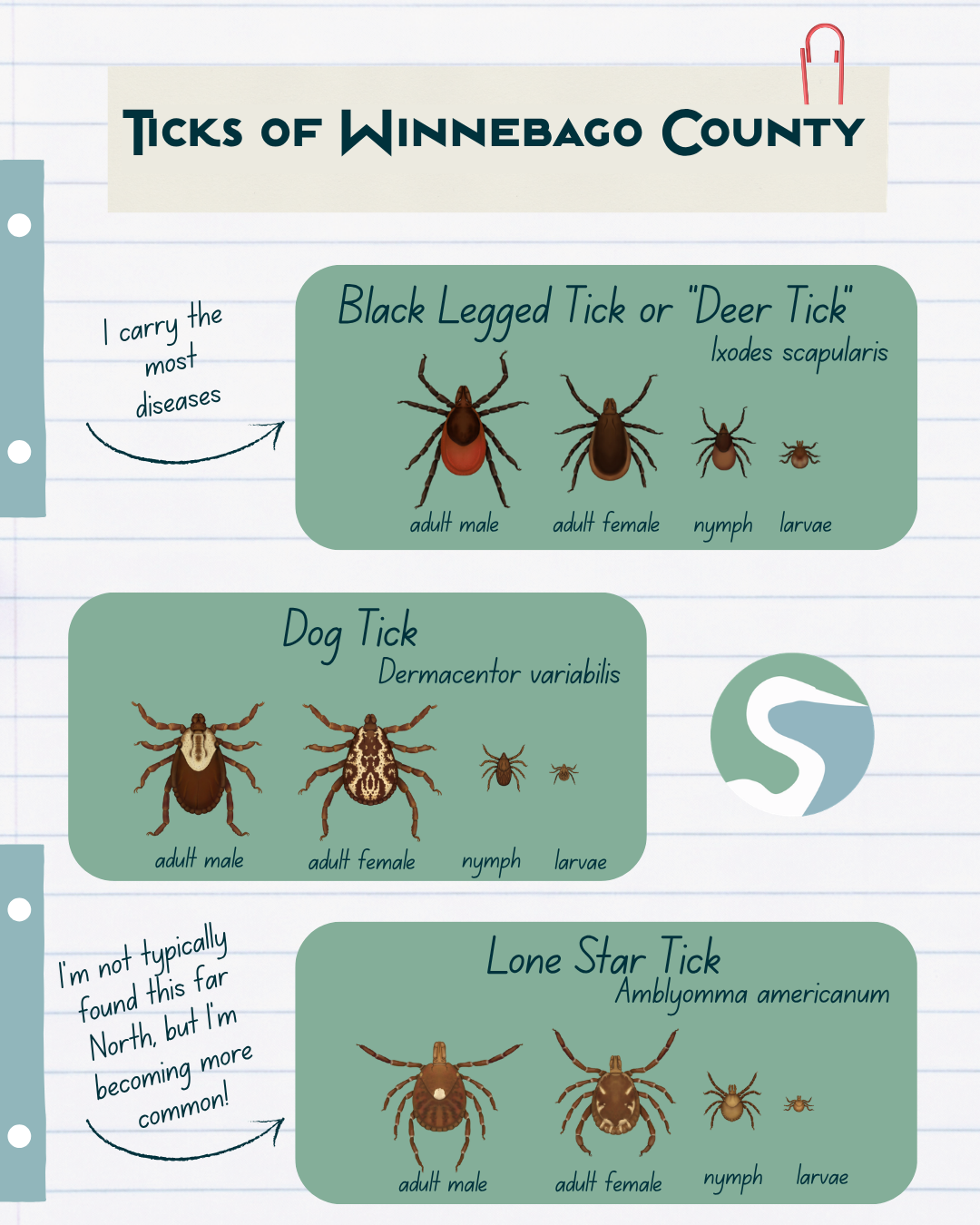
Ticks are a type of arachnid (like mites or spiders) that are found in grasslands and woodlands throughout the world. Ticks are external parasites, which means that they live by feeding on the blood of animals– and yes, that includes us! In Winnebago county, the most common ticks we find are the Dog Tick (Dermacentor variabilis) and Blacklegged Ticks (Ixodes scapularis), also known as ‘Deer Ticks’. Though not as common, there have also been reported spottings of the Lone Star Tick (Amblyomma americanum) in recent years. Though all of these ticks can carry diseases, our main culprit in Winnebago County is the Blacklegged Tick.
When are ticks most active?
Ticks are most active in the warmer months of spring, summer, and early fall, but they can be active year-round as long as the temperature is above freezing. As we see a trend of milder winters and warmer springs, ticks tend to stick around for longer than they used to.
Where are ticks most commonly found?
If there are grasses and shrubs around, odds are there are probably ticks around too. Ticks can really be found just about anywhere, but particularly tick-y areas tend to be places that are shaded and insulated with leaf litter. In these areas, ticks latch on to the legs of people and pets as they brush the vegetation on the side of trails or backyards. Once a tick is on your body, they will climb upward looking for a dark place to burrow and bite. Common burrowing sites include the scalp, waist, under the arms, and between the legs. It is only when a tick burrows and bites that they are able to transmit diseases.
Why should I be concerned about ticks:
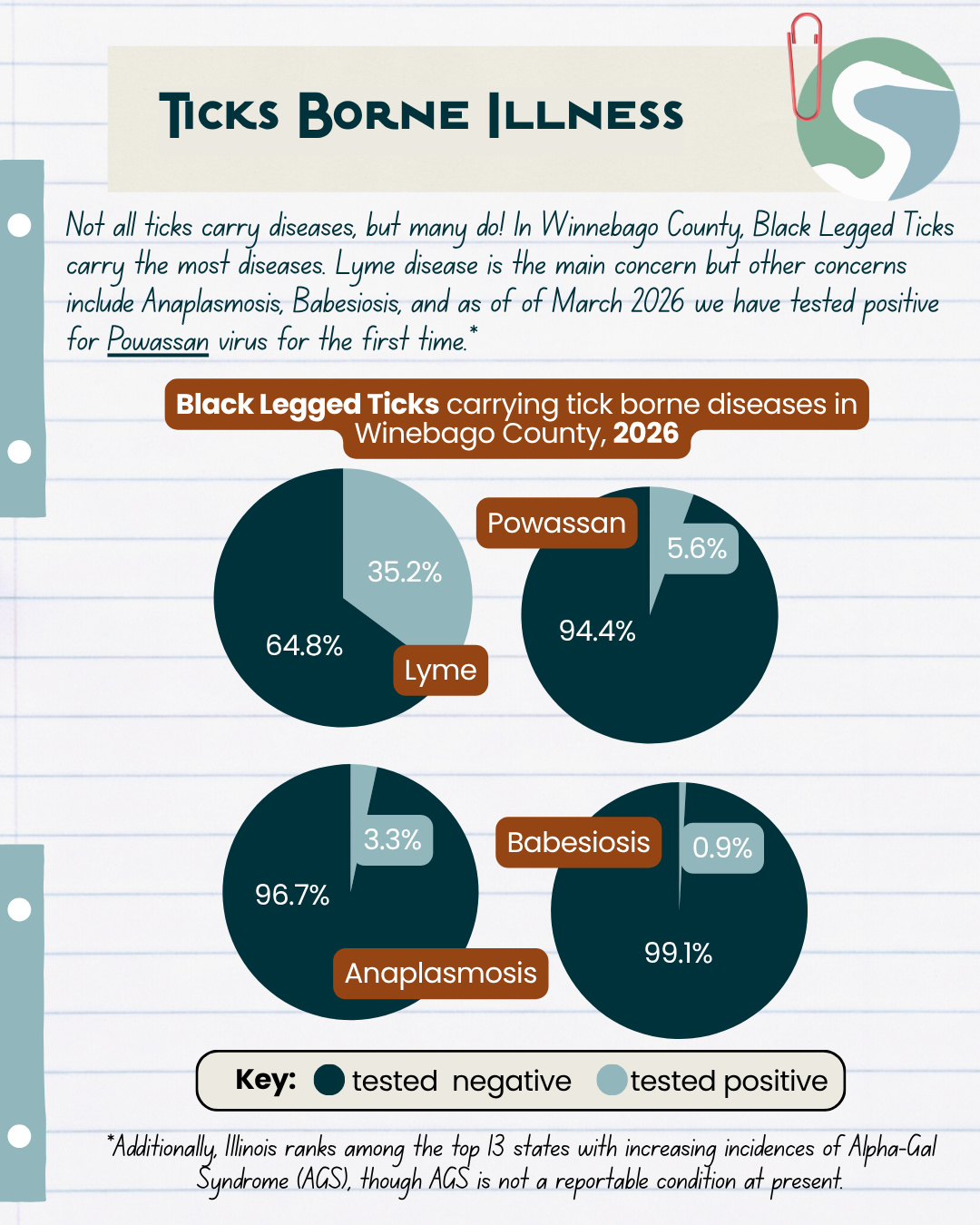
Not all ticks carry diseases, but many do. Lyme disease is the main concern for Blacklegged Tick-borne diseases in our county, but other concerns include Anaplasmosis, Babesiosis, and as of March 2026, blacklegged ticks in Winnebago County have tested positive for the
Powassan virus for the first time. Additionally, Illinois ranks among the top 13 states with increasing incidences of Alpha-Gal Syndrome (AGS), though AGS is not a reportable condition at present.
Why are there more ticks?
We’re seeing more tick bites largely because tick populations have increased, and that comes down to two main factors: environmental changes and a rise in host animals. First, climate conditions in Illinois have become more favorable for ticks. Winters are now warmer and shorter, which allows more ticks to survive. At the same time, earlier and warmer springs get them active sooner in the year. These shifts are also allowing species that once lived mostly in southern areas to expand northward into places they weren’t commonly found before. Second, changes in land management have unintentionally helped ticks. Forests now contain more leaf litter, fallen branches, and dense undergrowth, which create a moist, insulated environment. This protects ticks from extreme cold and heat, which are conditions that would normally reduce their numbers. In the past, periodic natural and controlled fires cleared out this debris. However, since fires have largely been suppressed since the 1800s, this protective ground layer has built up, giving ticks a more stable habitat year-round. Finally, there are more animals, or hosts, for ticks to feed on. Due to the decrease in predators in our area (such as bobcats and cougars), coupled with dense vegetation that provides shelter for small mammals, populations of deer, mice, and other small mammals have boomed. With more hosts available and better living conditions, tick populations have surged.
How to prevent tick bites:
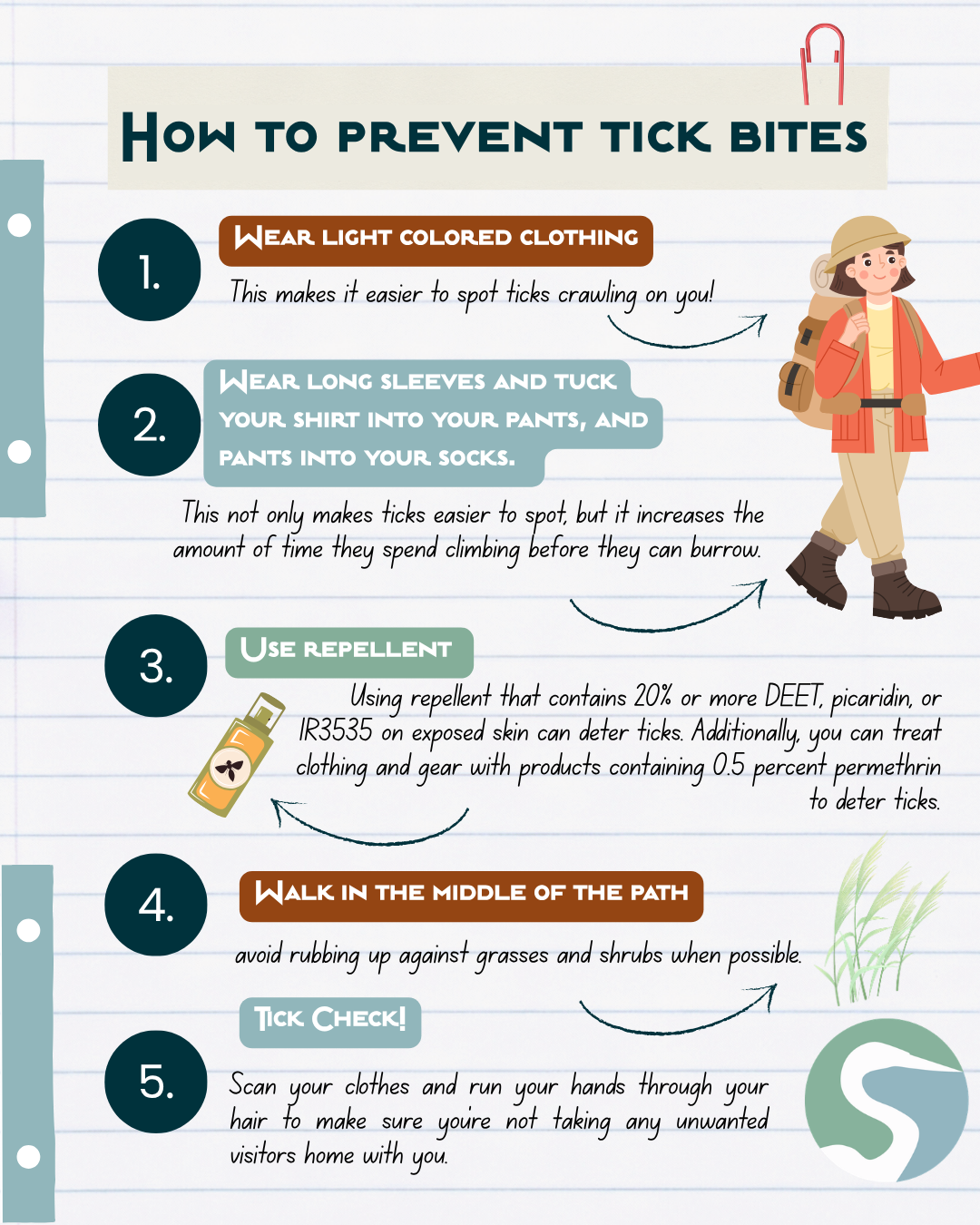
Luckily for us, ticks don’t bite right away, so you do have some time to spot and remove them before they bite. Though there is no hard and fast way to prevent tick bites all together, there are a few practices you can do to deter ticks from making you their next meal:
- Wear light colored clothing so it’s easier to spot ticks if they get on you.
- Wear long sleeves and tuck your shirt into your pants and pants into your socks. This not only makes ticks easier to spot, but it increases the amount of time they spend climbing before they can burrow.
- Use repellent that contains 20 percent or more DEET, picaridin, or IR3535 on exposed skin. Additionally, you can treat clothing and gear with products containing 0.5 percent permethrin to deter ticks.
- Walk in the middle of the trail, and avoid rubbing up against grasses and shrubs when possible.
- Perform tick checks often! Scan your clothes and run your hands through your hair to make sure you’re not taking any unwanted visitors home with you. If you’re hiking with a pet, do the same to them!
- Lastly, shower and change your clothes as soon as you can post hike!
What to do if you get bit:
If you do get bit by a tick, don’t worry! Most of the time, tick bites are no big deal and don't require medical attention. The most important thing is to remove the tick. To remove a tick, start by grabbing the tick as close to the skin as you can with a clean pair of tweezers or a tick key, and pull firmly. Don’t twist or grab the tick on another part of the body or the burrowed head may not come out. Once the tick has been removed, wash your hands and the bite site with soap and water and swab the bite with alcohol. Ticks do not die if you try to smush them, so rather dispose of the tick by placing it in a sealed container or in rubbing alcohol. Keep an eye out for signs of tickborne illnesses, including a red bull’s eye rash around the bite, red dots on the ankles and wrists, and flu-like symptoms.
Resources on Ticks and Tick-Borne Diseases:
*Most ticks need to be burrowed for at least 4 hours before they transmit diseases*
Anaplasmosis is an illness spread by ticks infected with the bacteria Anaplasma phagocytophilum. These bacteria can be spread to humans by blacklegged ticks. Symptoms typically begin 14 days post bite, and include fever, chills, rash, severe headache, muscle aches, nausea, vomiting, diarrhea, and loss of appetite. Anaplasmosis is a highly curable with early treatment, typically using the antibiotic doxycycline.
Babesiosis is caused by microscopic parasites that infect red blood cells. Babesia microti is the main species that has been found in people in the United States, and is primarily transmitted through the Blacklegged tick. Many people who are infected with Babesia microti feel fine and do not have any symptoms. Some people develop flu-like symptoms, such as fever, chills, sweats, headache, body aches, loss of appetite, nausea, or fatigue. Babesiosis is a treatable disease and many healthy people with no symptoms do not require treatment. Symptomatic cases are managed with a 7 to 10-day course of anti-parasitic/antibiotic medications.
Lyme disease is a fairly common bacterial disease transmitted primarily by blacklegged ticks. Symptoms can vary greatly from one person to another, and also vary with the length of time a person has been infected. Typically, a ‘bullseye’ rash occurs in the majority of cases and begins three days to a month after the bite of an infected tick, and is often accompanied by one or more nonspecific symptoms: fatigue, chills and fever, headache, swollen lymph nodes, and joint and muscle pain. Lyme disease can be treated if caught in its early stages, but because early symptoms are similar to those of more common illnesses, many people do not get diagnosed. Symptoms can develop months- and sometimes years- later if the disease is not diagnosed and treated. If untreated, it progresses to cause severe issues, including arthritis, neurological problems, heart palpitations, and chronic cognitive issues.
Although still rare, the number of reported cases of people sick from Powassan virus has increased in recent years. There are no vaccines to prevent or medicines to treat Powassan virus disease. Initial symptoms can include fever, headache, vomiting, and weakness. Powassan virus can cause severe disease, including inflammation of the brain (encephalitis) or the membranes around the brain and spinal cord (meningitis). Symptoms of severe disease include confusion, loss of coordination, difficulty speaking, and seizures.
Alpha-gal syndrome (AGS) is considered a rare but emerging public health issue. Alpha-gal syndrome (AGS) is a serious, potentially life-threatening allergy to red meat and dairy, often transmitted from Lone Star Ticks. Symptoms typically appear in a delayed manner, 2–6 hours after consuming beef, pork, lamb, or dairy products, making it hard to diagnose. Common reactions include hives, severe stomach pain, diarrhea, and vomiting.
Sources:
Center for Disease Control - Ticks
National Forest Foundation- Here is What You Need to Know to Stay Safe During Tick Season
University of Illinois- Study identifies hotspots of disease-carrying ticks in Illinois
Winnebago County Health Department- Powassan Virus Found In Ticks From Winnebago County
Illinois Department of Public Health- Common Ticks
Illinois Department of Public Health- Interactive Tick Surveillance Map

RECENT ARTICLES