FIELD NOTES BLOG
The Power of Prairie Roots
Have you ever looked around and wondered about grass? It may not seem like there’s much to notice about the common golf course, front lawn, sidewalk adjacent sort of grass we see everyday, but if you look below the surface there’s a whole world and history.
These often monochromatic, sprawling green landscapes are planted with what is referred to as turf grass, such as Kentucky blue grass, a plant imported to the United States from Europe and North Africa. This style of lawn design was brought to the U.S. from Europe during the 1700s, where long expanses of short green grasses were associated with the manicured country estates of the wealthy and upper social classes. The popularization of this cultural import co-occurred and played a role in the development of U.S. suburban culture in the late 1800s, strengthening through the mid-20th century when it became more widely actionable for people in the middle class. Turf grass now covers app. 40 million acres across the country(an area larger than the whole of Illinois).
The planting of monoculture grass areas like this, where there are long stretches of only one kind of plant, came in contrast to the landscapes that grew for millenia on the place we now call the United States. These ancient landscapes were full of biodiversity, and in many areas housed ecosystems where humans functioned as just one part of a balanced set of biological processes.
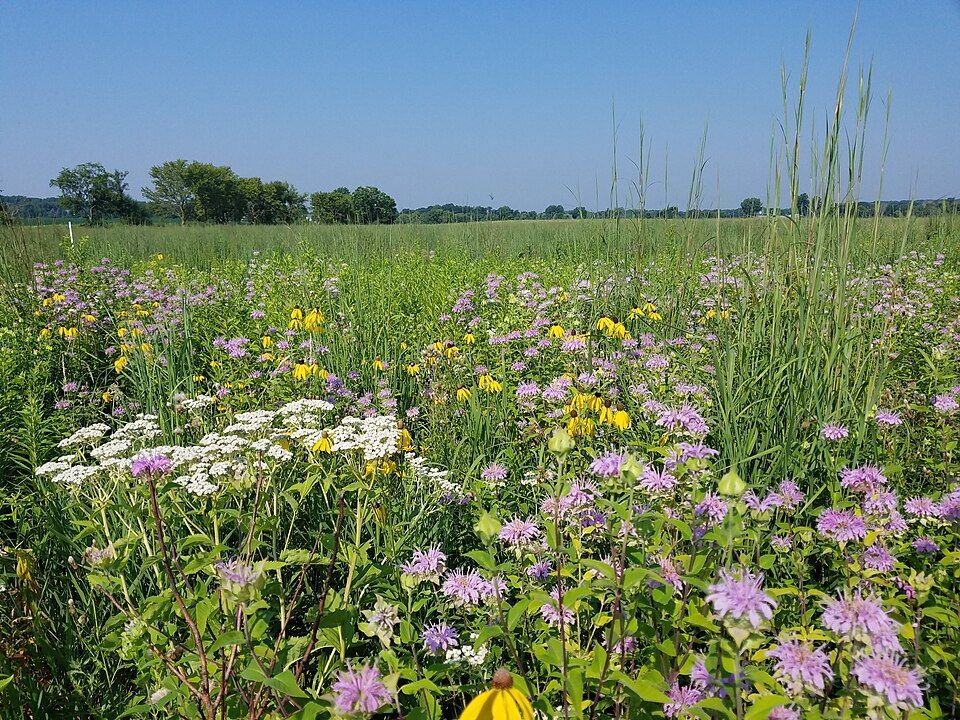
In Illinois specifically, native grasslands–in this region called prairies–used to cover 21 of Illinois’ 36 million acres on their own. Prairies in Illinois formed (and the .01% that still remain still form) unique and powerful living systems. Not only do they create a safe home for many animal species to go about their lives, their root systems push through soil to notable depths, with an average length between 5-15 feet, whereas the turf grass lawns discussed above have roots not digging more than 3-4 inches into the earth. The impact of these root systems is profound, creating long pathways for water absorption, microbial and mycelial growth, and the draw down of excess carbon from the atmosphere back into the earth. One acre of restored prairie can sequester(take out of the air and store in root systems) 1 ton of carbon a year, and absorb 65% more stormwater–or water left on the ground after it rains–than turf grass.
The transformation of turf grass back to prairie has profound positive impacts on surrounding ecosystems. The restoration project at
Elliot golf course will provide a prime example for residents of this region to watch as the land begins to come alive with the myriad colors, animals, and landscape benefits of a prairie in just a few years.
Sources:
https://www.sustainablewoodstock.org/a-history-of-the-american-lawn/
https://blog.nwf.org/2024/04/why-we-have-lawns/
https://www.fs.usda.gov/r09/midewin/natural-resources/forest-management
https://www.chicagobotanic.org/blog/plant-science-conservation/lowdown-prairie
https://www.onlyraindownthedrain.com/kids/
https://www.nature.com/articles/s41467-024-46991-5?fromPaywallRec=false

RECENT ARTICLES