FIELD NOTES BLOG

The Grove - Low Down with Linda

Linda Sandquist
March 5, 2026

I’m a grandma. I have four grandchildren who I assume are the most perfect children in the world. If you’re a grandparent, I know you have perfect grandchildren too. It’s nice to be part of the same club.


If you’re like me, you probably worry about your grandchildren and what our technology-heavy  future holds for them. Admittedly, times have changed and children are changing too. They are not outside playing “until the street lights come on” like we did. Things are more organized and structured. Children are involved in organized sports, organized lessons of all sorts, and homework on tablets take up their afternoons and evenings. Games are happening on screens with gameboxes, people feel less trusting of their neighborhoods, and children are not seen engaging in outdoor play, tag, hide the flag, or simply riding their bikes around the block.


That’s why I’m so proud to be here at Severson Dells Nature Center. Our mission is to create a connection between people and nature. We focus on hands-on, science-based activities designed to inspire a love for the natural world and the stewardship of it.


For children specifically, Severson Dells is home to the only free nature playscape in the area.  Called
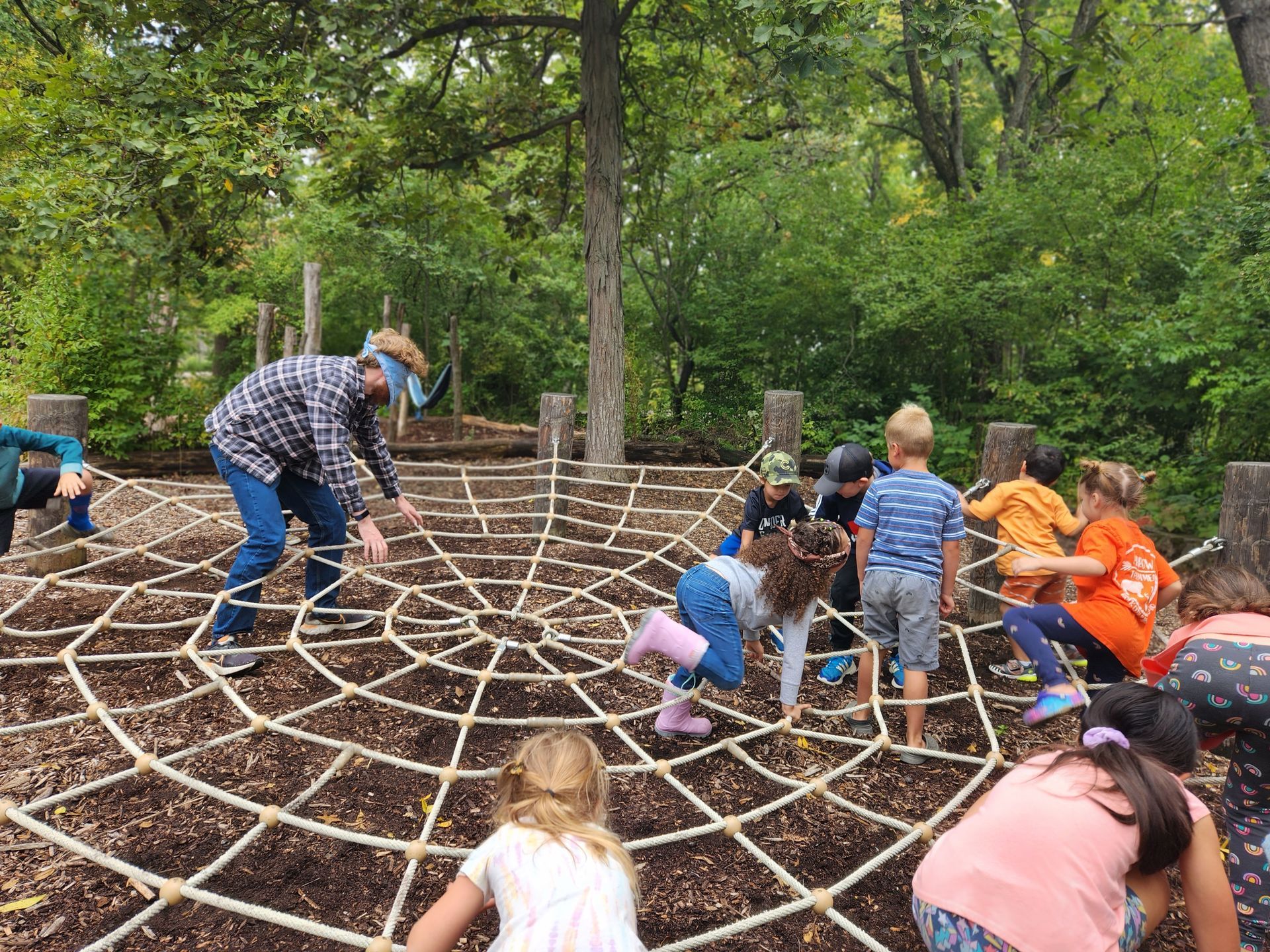
The Grove, this nature playscape is a playground strategically built without traditional swing sets, slides, jungle gyms, and other apparatuses. Children get to use their imaginations to explore natural materials in a playful way. 


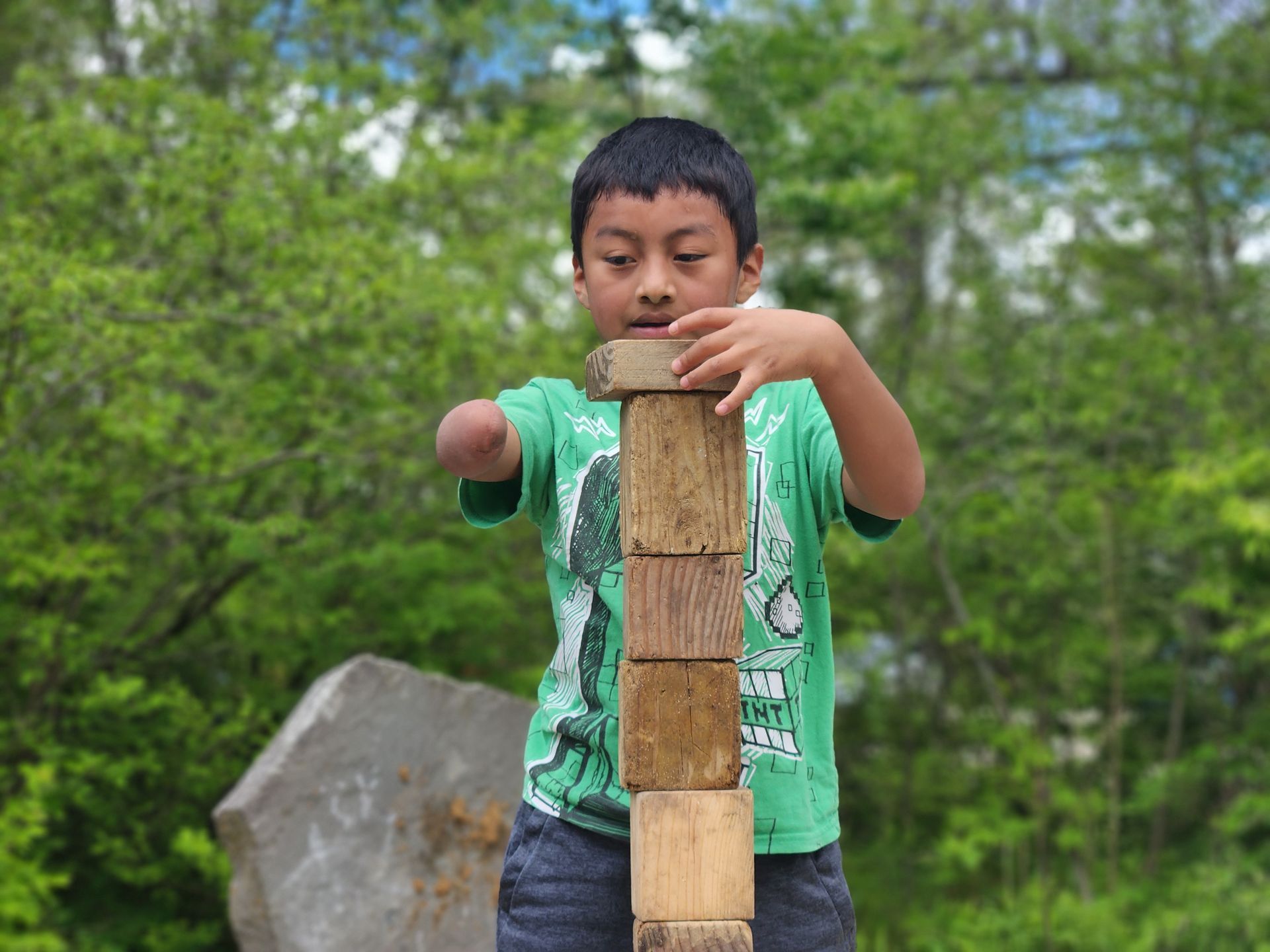
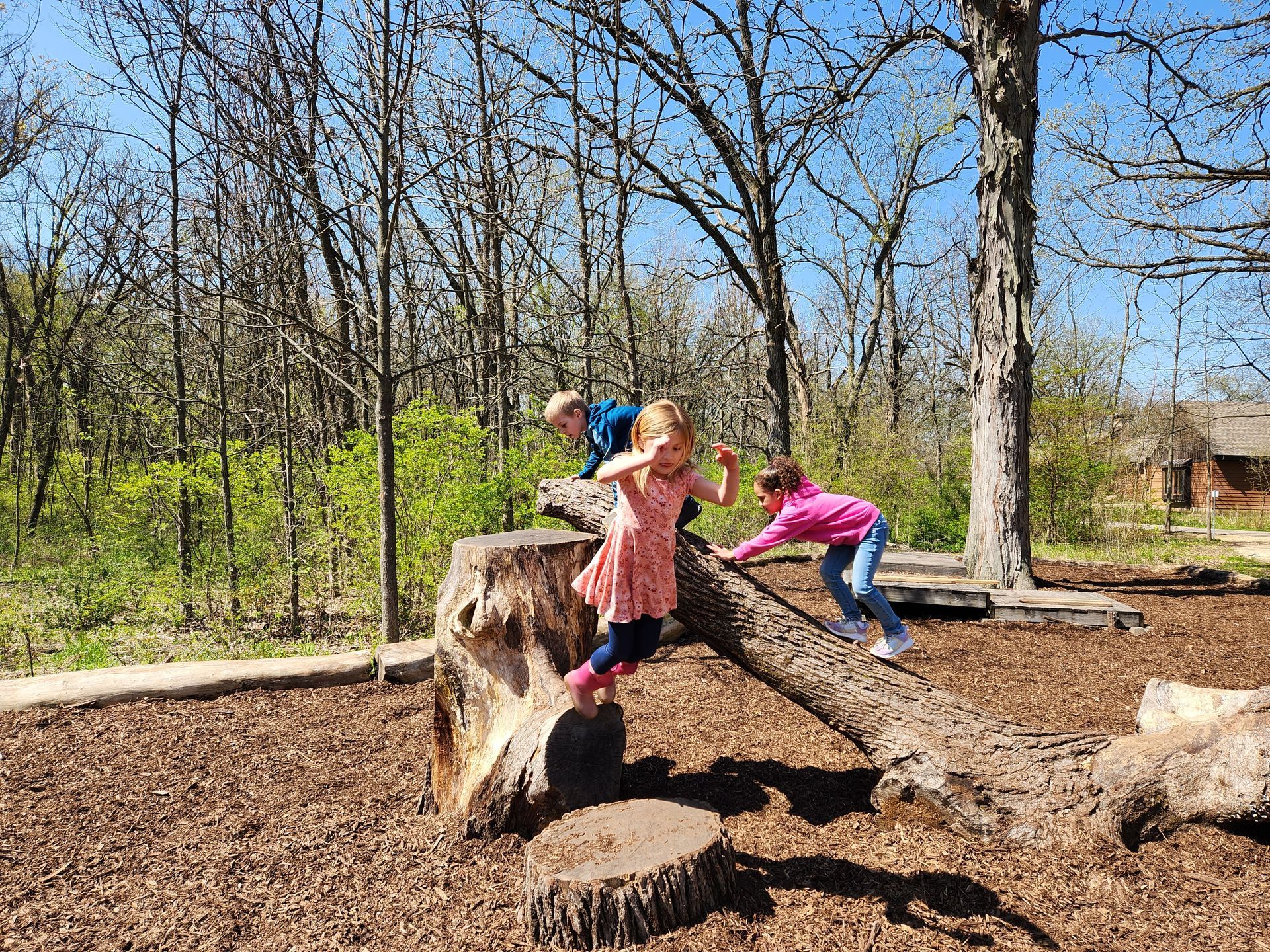
There is a block lab with wooden blocks and tree cookies that children use to build, stack, and create. A covered shack allows children to hang out, play house, school, or store, and display treasures on the shelves inside. Kids can paint with water from the rain barrel just outside the shack or play on the sand table. And there are logs that children can climb on, rearrange, and use to make up whatever adventure stories they want. 


Rules for the playscape are simple: get messy, touch it all, be respectful of others, explore, pretend, and make friends. Have fun and leave electronics at home. For parents and grandparents: bring a book, something to sit on, a waterbottle, sun screen, and maybe some bug spray. If your kids are like my grandchildren, you’re going to be here a LONG time! 


The Grove Nature Playscape is located just inside Severson Dells Forest Preserve. It’s open every day from sunrise to sunset and admission is free. Climbing features are intended for ages 5 - 12, but fun for all ages, from 0 to 99 is guaranteed.

RECENT ARTICLES
By Emma Zimmerman June 11, 2026
The ocean, and all of the water in it, is constantly in motion. Though it may sometimes appear calm on the surface, enormous currents continuously move ocean water around the globe like a giant conveyor belt. These currents regulate weather, move nutrients across ecosystems, and shape the climates of entire continents. Currents on the surface of the ocean are controlled by the wind, but deeper in the ocean currents are controlled by water density in a process known as thermohaline circulation . Thermohaline refers to the temperature (thermo) and salinity, or saltiness, (haline) of the water. Circulation refers to how the water moves throughout the ocean from pole to pole. Though this is a complicated sounding word, the process is actually pretty simple. Here’s how it works: As ocean water travels toward the poles it becomes colder, and when it gets cold enough, it eventually begins to freeze and forms into sea ice. What is important about this process is that when seawater freezes, the salt is left behind in the surrounding water. As a result, the surrounding water becomes saltier, colder, and in turn becomes more dense than the water around it. Eventually, this water becomes dense enough to sink deep into the ocean, and warmer surface water moves in to replace it. This process of freezing, melting, and replacement continues on and on, resulting in a continuous cycle of moving water that forms deep ocean currents, often referred to as the “global ocean conveyor belt.”
By Emma Zimmerman June 4, 2026
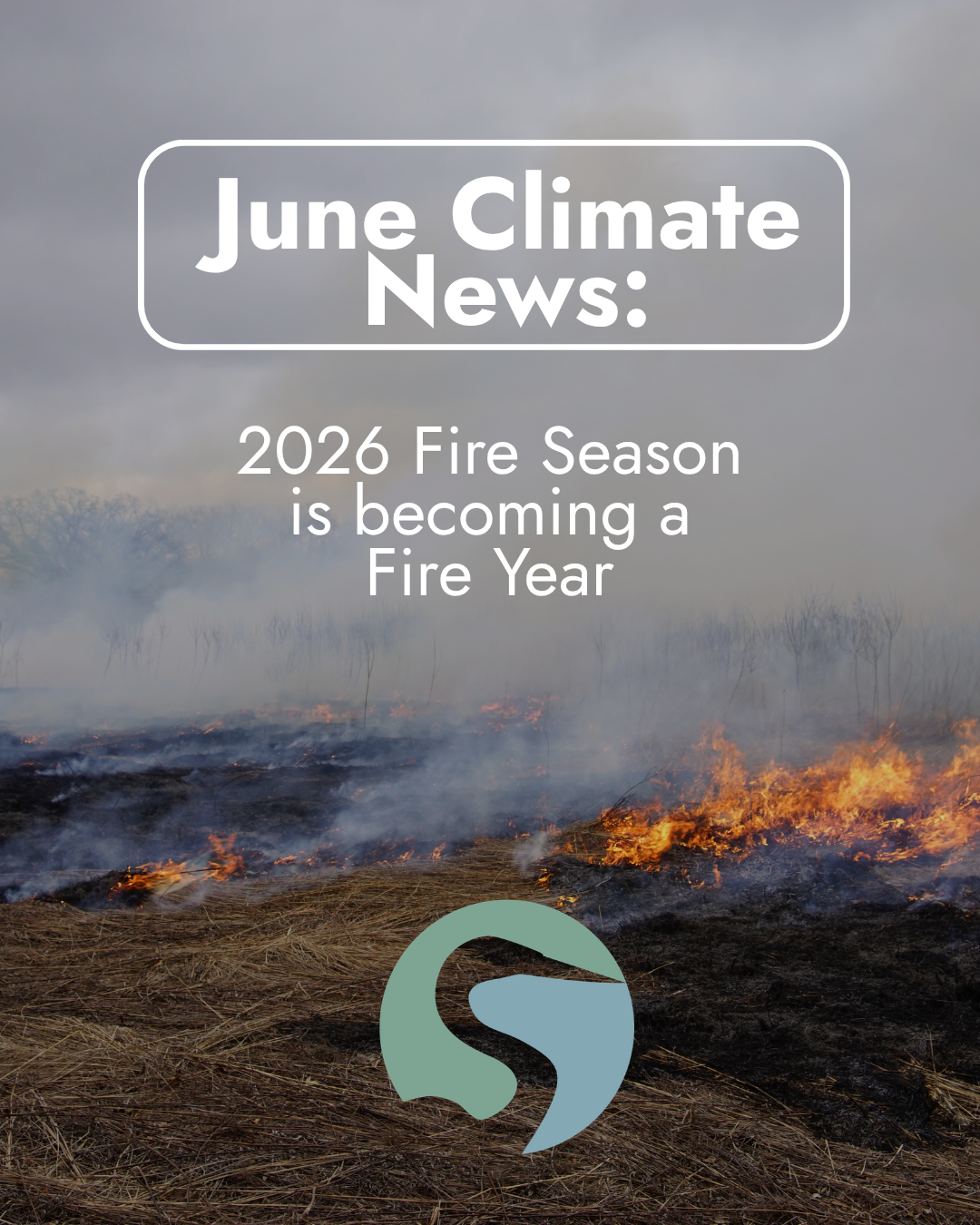
Experts are warning that 2026 may bring a record wildfire season to the United States, so severe that many researchers and fire agencies are no longer calling it a “fire season” at all. We are off to such a start that experts are now referring to it as a fire year. Traditionally, the wildfire season in the United States peaks between May and October, but we have seen many fires throughout the southern and western United States already this spring. Most major fires occur in western states. However, impacts from wildfires can be felt across the entire country, including here in northern Illinois. Wildfire smoke can travel hundreds or even thousands of miles, affecting our air quality here in Rockford. Maybe you recall the hazy skies and dangerous air quality alerts from the last few summers caused by fires burning far away in Canada. Unfortunately, these days are not going away, and if anything, we should expect more of them in the future. So why is this year a “fire year”, and why are experts concerned? Let’s dig into it.
By Olivia Price May 28, 2026
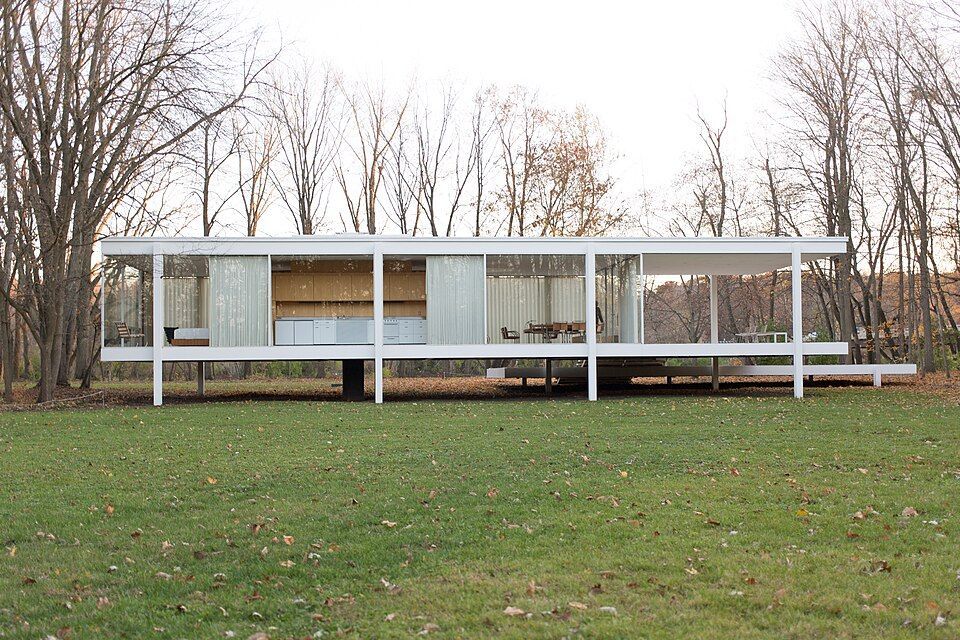
Nature and Architecture in Northeastern Illinois