FIELD NOTES BLOG
Carbon Sequestration at Prairie's Edge
As we begin the process of rewilding the former Elliot Golf Course, now named Prairie’s Edge, one of the first steps is to gather baseline data so we can track our progress over time. One of the biggest changes we expect to see as the land transitions from a golf course to native habitat is how much carbon it can store. To understand why this matters, it helps to start with carbon itself.
Carbon Sequestration
Carbon is a fundamental building block of life. It’s in the air we breathe, the food we eat, and what makes up you and me. It also plays a major role in regulating Earth’s climate. Carbon is constantly moving through what scientists call the
carbon cycle, a system that includes plants, animals, soils, oceans, rocks, the atmosphere, and us.
You can think of the carbon cycle as a kind of planetary recycling system. As carbon moves through this cycle, it shifts between different reservoirs, or places where it can be stored for varying amounts of time, before it is changed and transformed into a new iteration. Some of these movements happen quickly, like when plants absorb carbon dioxide during photosynthesis or when animals eat plants. Other processes happen incredibly slowly, such as when carbon is stored deep underground for millions of years.
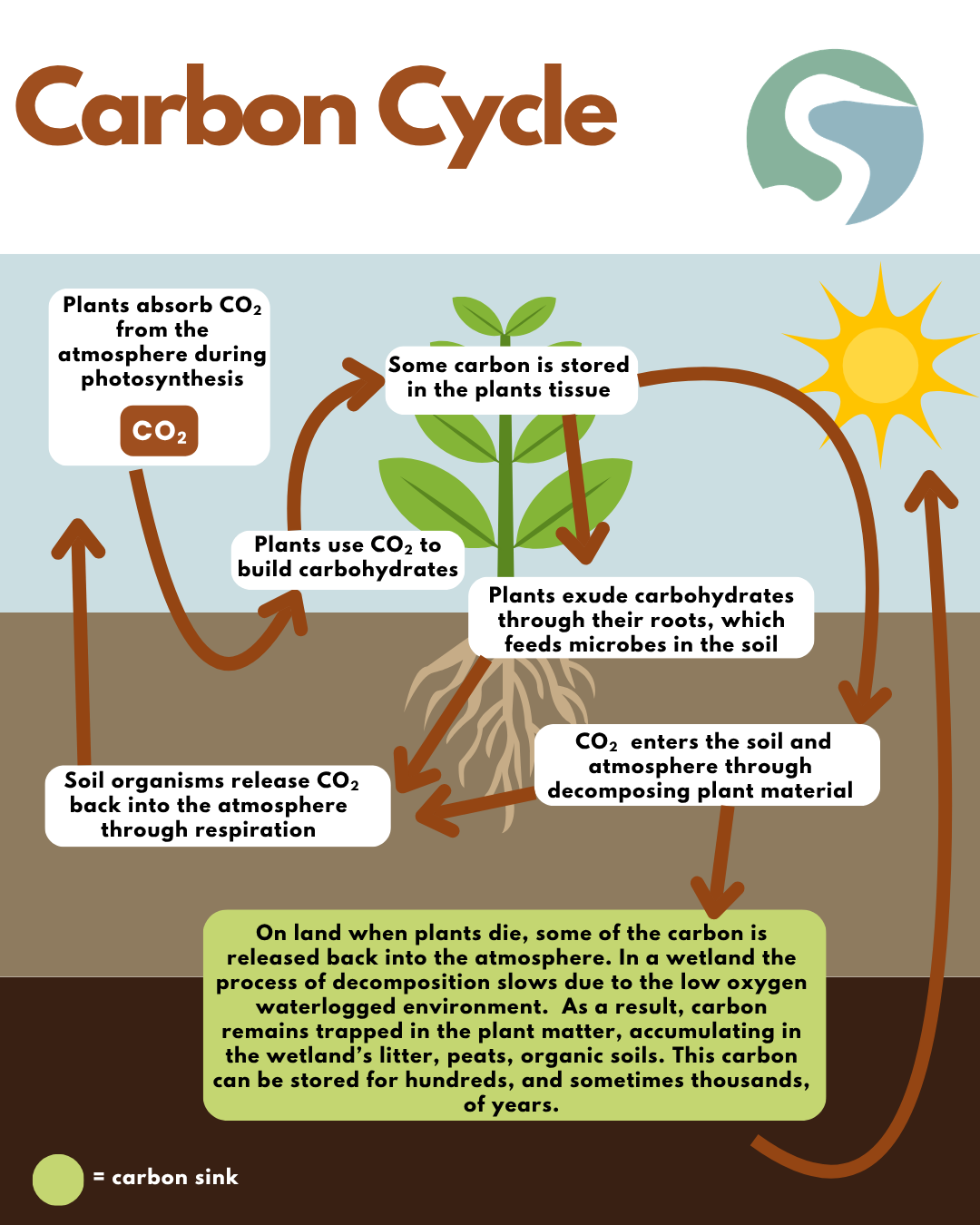
Most of Earth’s carbon is locked deep within rocks and sediments and does not move easily through the cycle. That long-term storage is where fossil fuels come from. Coal, oil, and natural gas are all formed from ancient plants and animals whose carbon was buried and transformed over geologic time. Under natural conditions, this carbon would return to the atmosphere very slowly, through geologic processes like erosion or volcanic activity. However, human activities have dramatically sped up this part of the carbon cycle, and this is where problems begin.
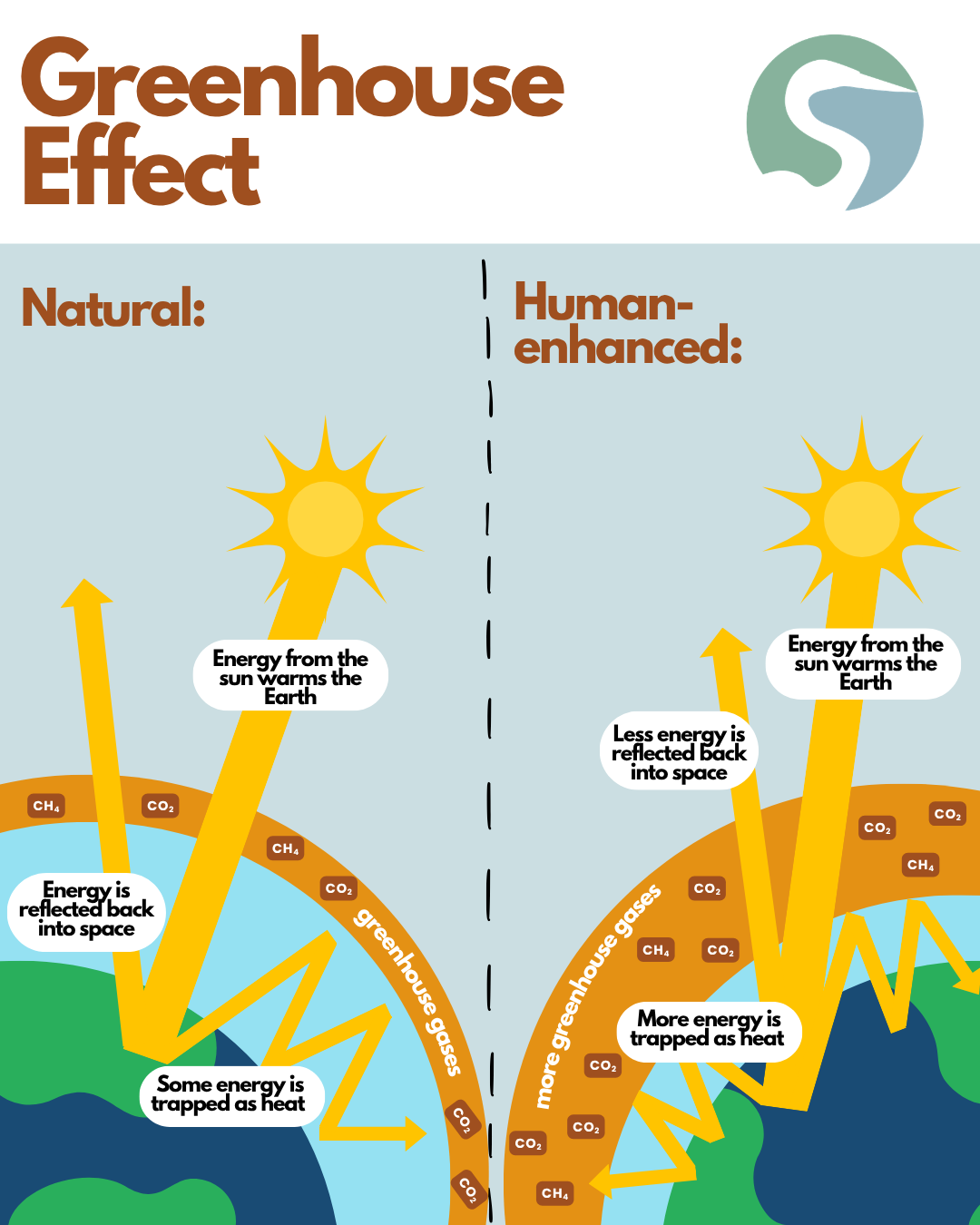
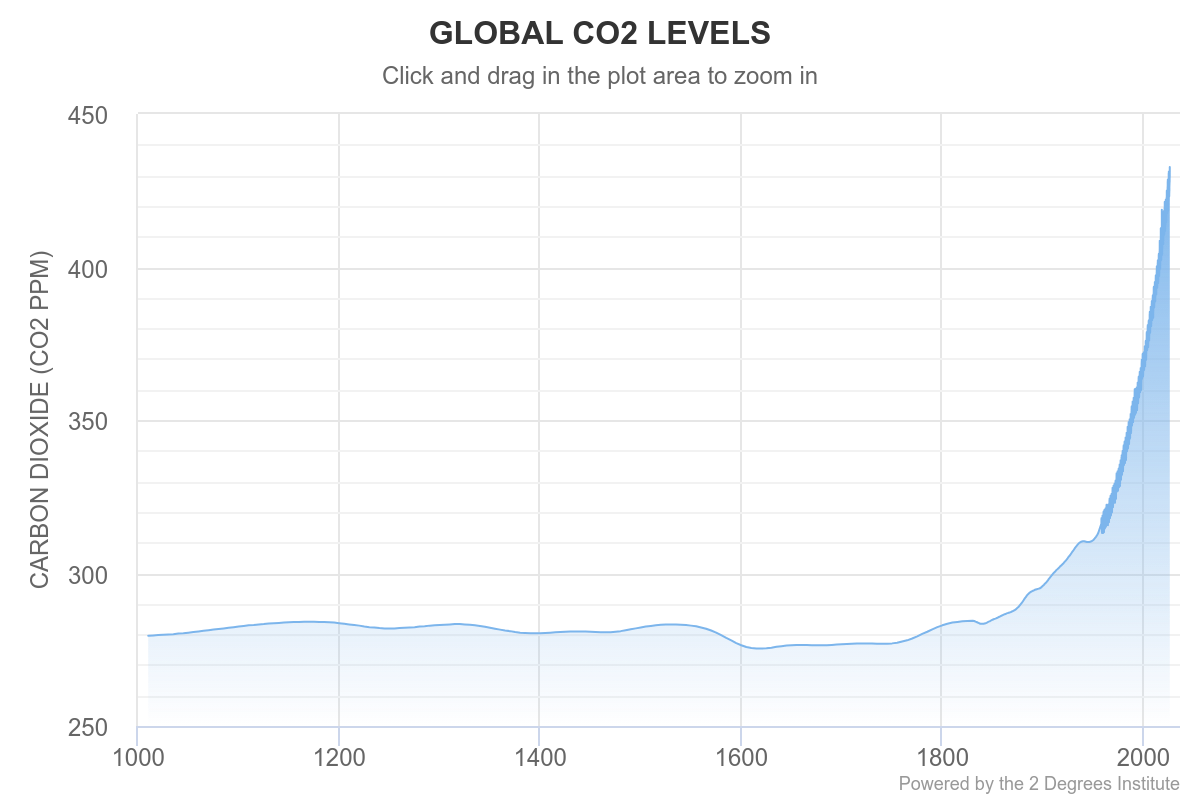
When we burn fossil fuels or alter the landscape, we release large amounts of stored carbon back into the atmosphere in a relatively short amount of time. Because this amount of carbon is more than natural systems can absorb it, carbon dioxide levels in the atmosphere have risen rapidly. Today, atmospheric carbon dioxide (CO2) is higher than it has been in the last 3.6 million years. This matters because carbon dioxide is a greenhouse gas, meaning it traps heat in the Earth’s atmosphere. As more of it accumulates, more heat is retained, and this is referred to as the greenhouse effect. The greenhouse effect, ultimately, drives the process we know as global warming.
One way to help rebalance this system is through carbon sequestration, the process of capturing and storing carbon so it stays out of the atmosphere. Many natural ecosystems do this automatically. Forests, wetlands, grasslands, and especially soils can act as carbon sinks, meaning they absorb more carbon than they release. While oceans are the largest carbon sink globally, soils are incredibly important, and often overlooked.
Plants help drive this process through photosynthesis, where they convert carbon dioxide from the atmosphere and turn it into sugars that build their leaves, stems, and roots. When plants grow, shed leaves, or eventually decompose, some of that carbon is transferred into the soil as soil organic carbon (SOC). Over time, healthy ecosystems build up large reserves of this soil organic carbon. In fact, soils around the world store more carbon than the atmosphere and all plant life combined!
However, not all landscapes store carbon equally. When land is simplified into a single species, known as a monoculture, it often loses its ability to store and retain carbon effectively. Highly managed landscapes, like agricultural fields or golf courses, tend to fall into this category. This sort of land management can disrupt natural soil processes and reduce long-term carbon storage. This carbon deficit, however, creates an opportunity. By changing how land is managed through rewilding, we can rebuild soil carbon and improve ecosystem health.
Rewilding Prairie’s Edge
Prairie’s Edge is being transformed from a highly managed golf course into a biodiverse landscape dominated by native ecosystems, including prairie and oak savanna. This process, known as rewilding, doesn’t just change what the land looks like, it also fundamentally changes how the land functions.
One of the biggest differences lies underground in how the land stores carbon. Unlike the turfgrass typical of golf courses, which has relatively shallow roots, native prairie plants grow deep, complex root systems that can extend several feet into the soil. These roots continuously add organic material belowground as they grow, die back, and regrow each season. This steady input of organic matter helps rebuild soil structure, and increases the amount of carbon stored in the soil over time. In prairie systems, much of the carbon is stored underground in roots rather than aboveground in leaves and flowers, making them especially effective at long-term carbon storage. As restoration progresses at Prairie’s Edge, we expect to see these processes gradually rebuild soil organic carbon that may have been lost under previous land use.
Measuring Carbon at Prairies Edge
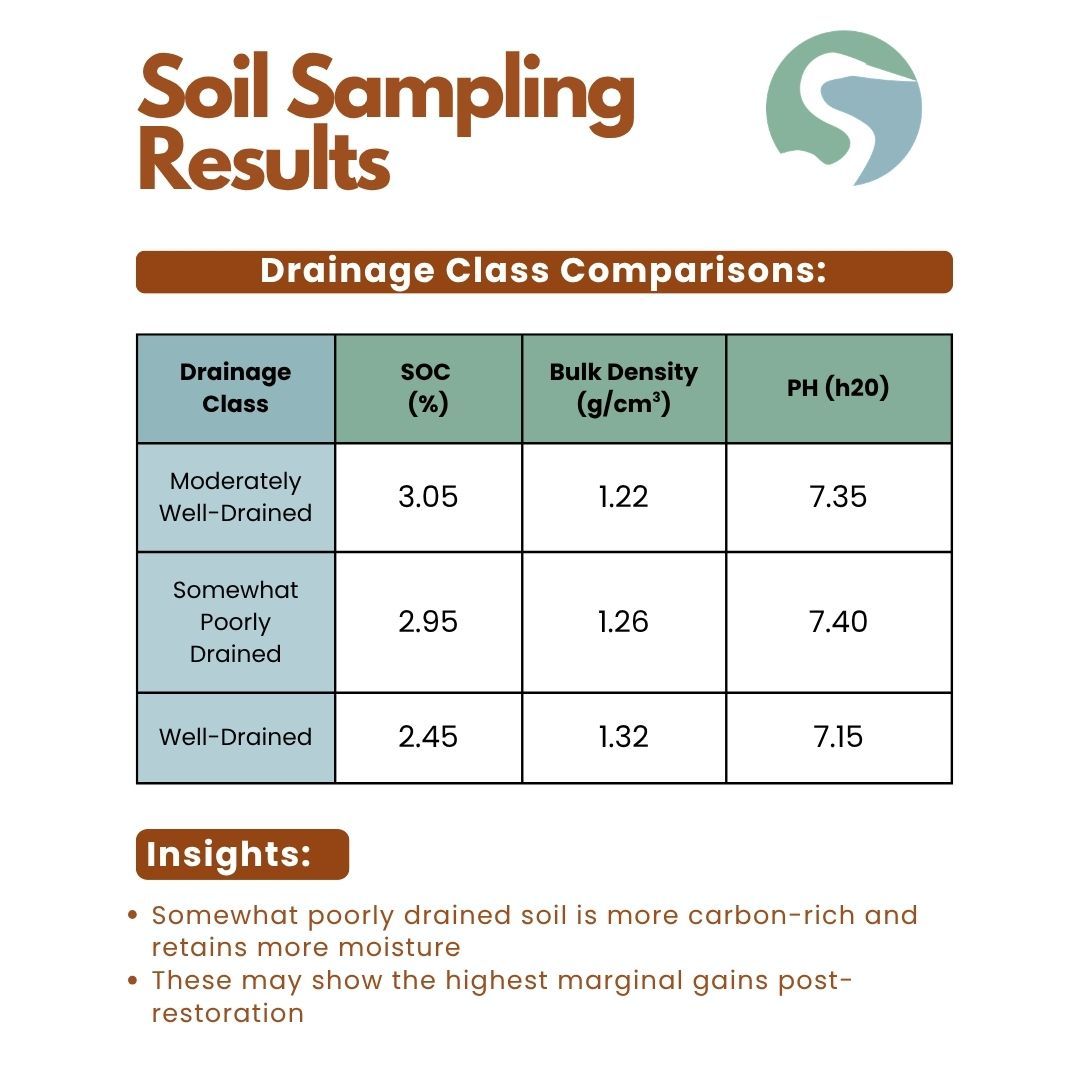
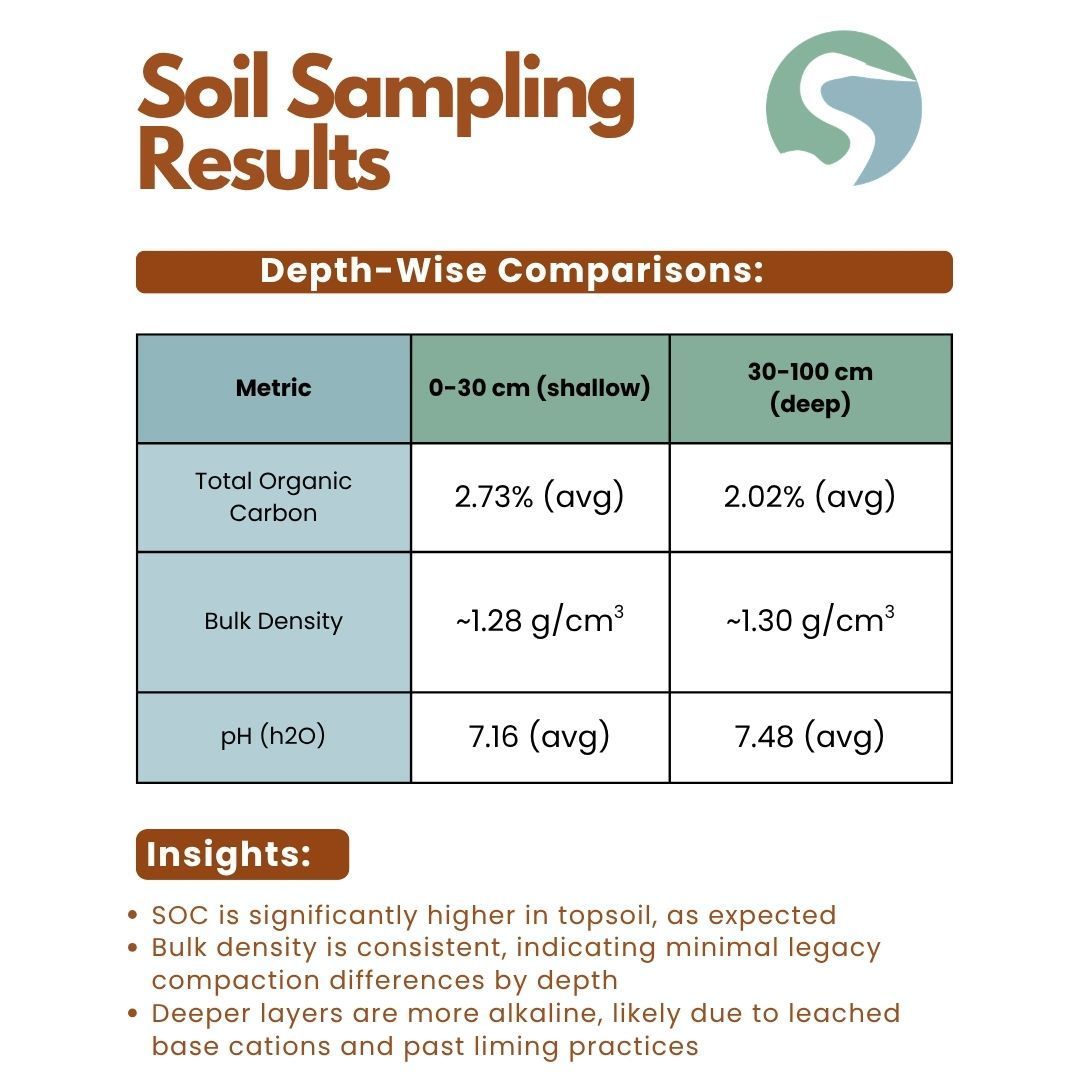
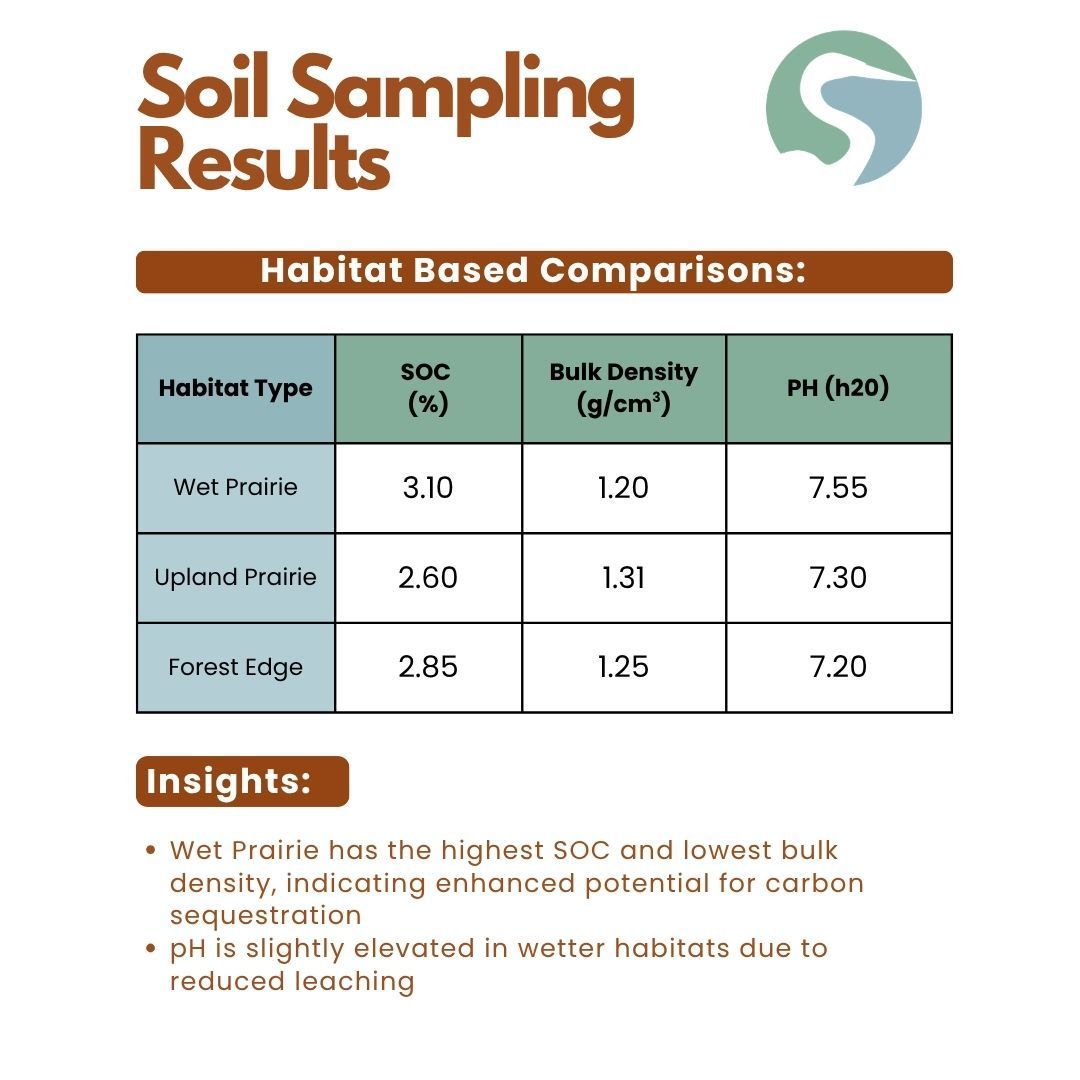
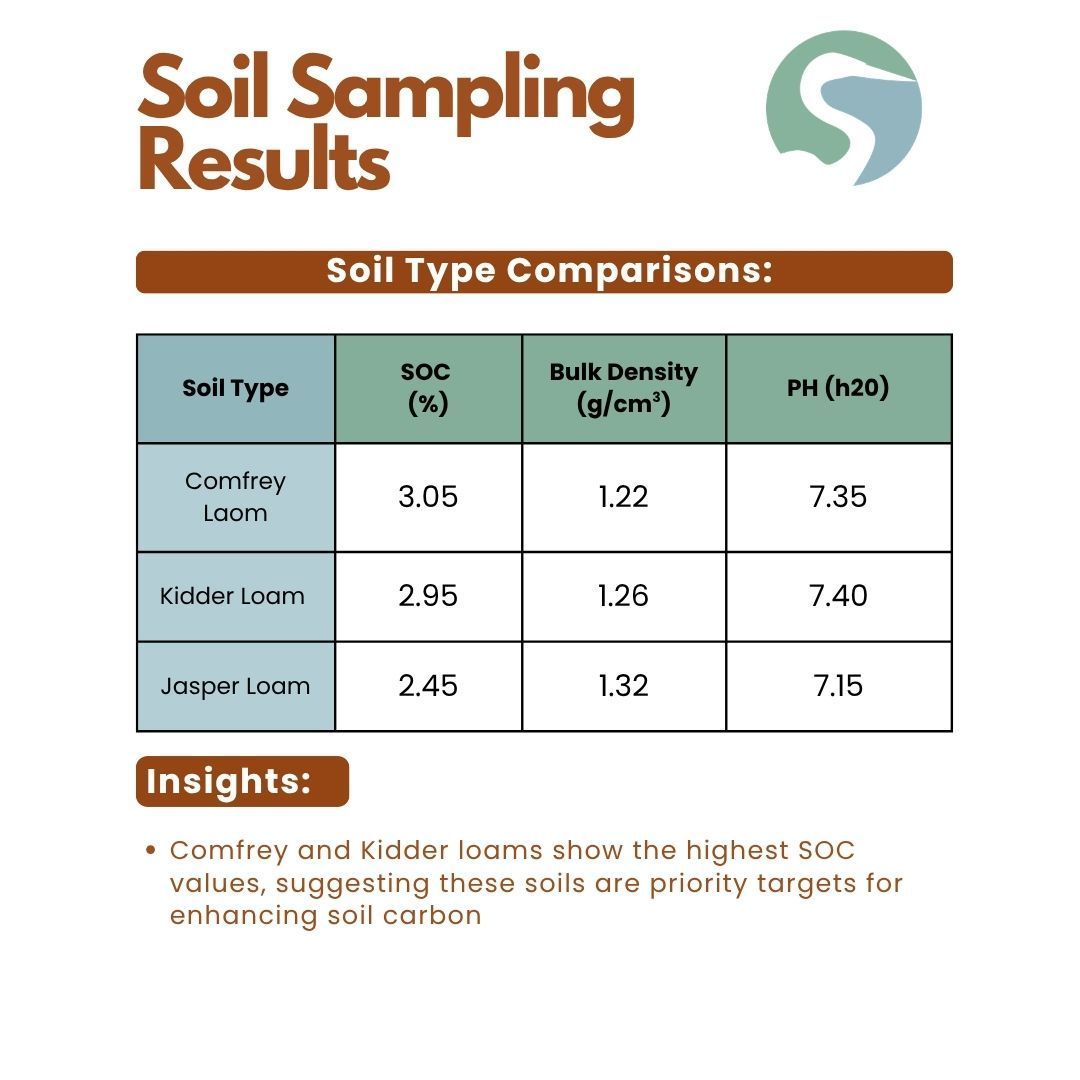
As restoration begins at Prairie’s Edge, researchers at SeqSolutions have collected baseline soil carbon data across the site. This baseline data tells us how much carbon is currently stored in the soil, and gives us a baseline to compare against in the future. Over time, these measurements will help us track how restoration efforts are changing carbon storage. In April 2025, SeqSolutions analyzed 23 soil samples from the property. Researchers measured Total Organic Carbon (%TOC), bulk density (g/cm³), and pH, comparing soils from three different habitats: wet prairie, upland prairie, and forest edge.
Soil Organic Carbon:
Soil Organic Carbon (SOC) is a measure of how much carbon is stored in soil organic matter. This organic matter is made up of decomposed plant and animal material, compounds released by roots, and microscopic organisms like bacteria and fungi, which is essential for healthy soil. SOC helps soils hold water, retain nutrients, support microbial life, and maintain structure. Because of this, it is widely used as an indicator of overall soil health. Higher SOC levels generally point to a healthy, well functioning ecosystem, while lower levels can signal degradation or past disturbance.
SOC is measured as follows:
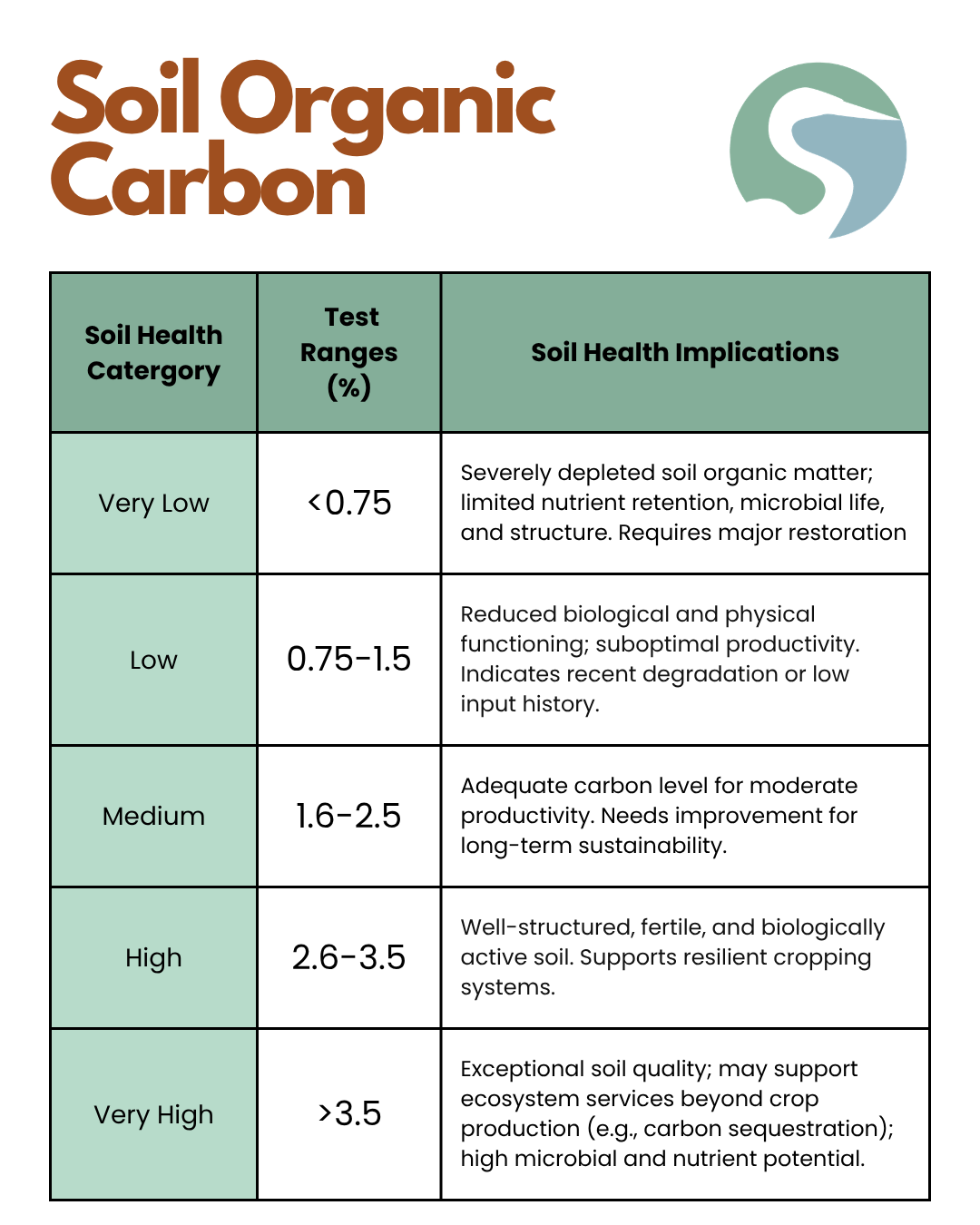
Illinois, and much of the greater Midwest, is known for its fertile, highly productive soil. We owe this to thousands of years of prairie ecosystems, where deep-rooted prairie plants built up layers of organic matter as they grew and decomposed. Glacial deposits from long ago also helped shape a nutrient-dense, loamy soil that holds moisture while still draining well, making it ideal for agriculture. Because of this history, our soils have traditionally been high in soil organic carbon.
However, when native prairies are removed or degraded, that long-built carbon can be lost over time. Restoring prairies and other native habitats helps reverse this trend by rebuilding soil organic matter, capturing carbon, and supporting healthier ecosystems. Even though SOC levels at Prairie’s Edge are relatively high, there is still significant potential to restore the land closer to its original capacity.
Bulk Density
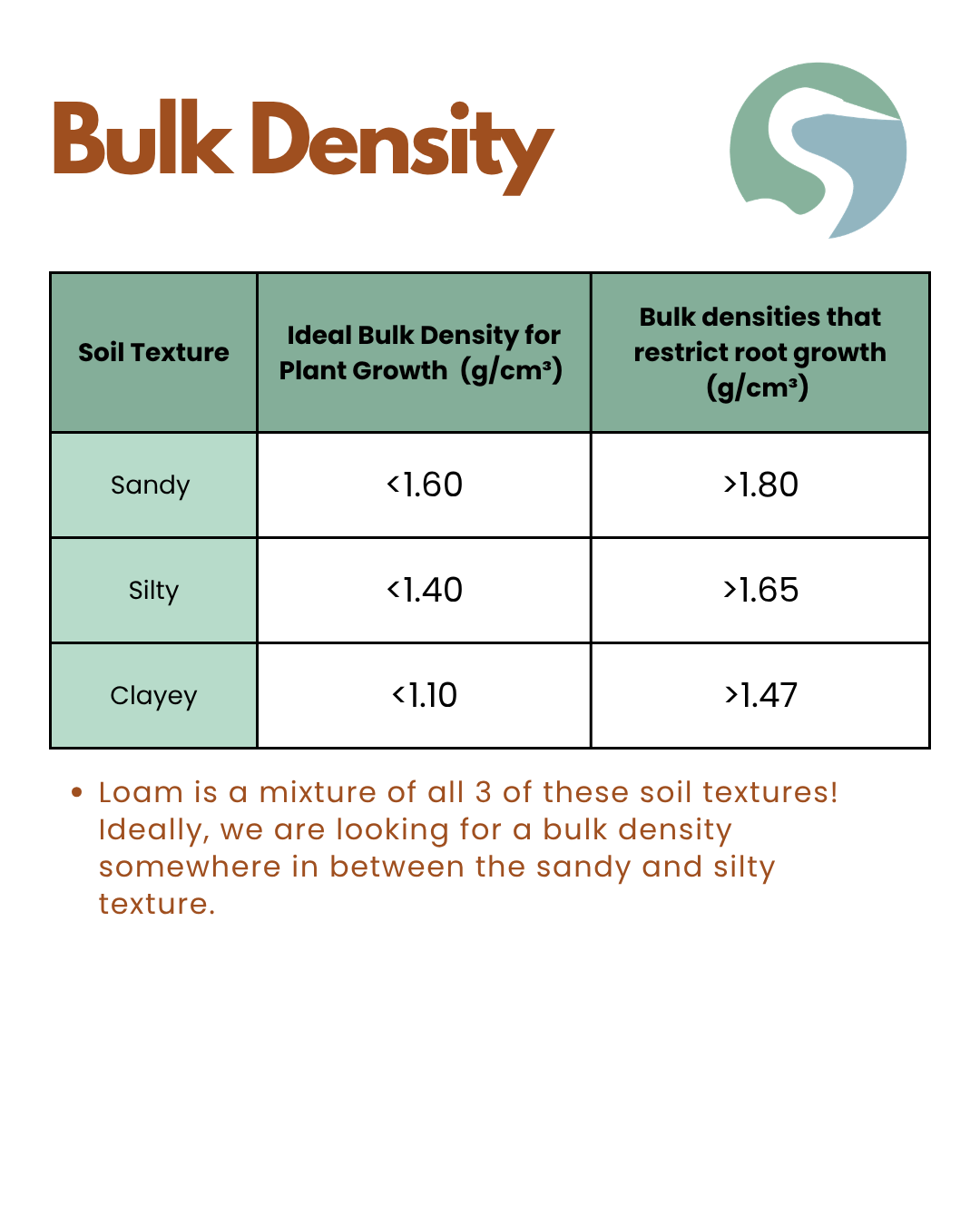
Researchers at SeqSolutions also measured bulk density of the soil sampled. Bulk density measures how tightly packed the soil is, and it is another indicator of soil health. This measurement helps us understand how well soil can function, such as whether it can support plant roots, whether water can move through it, and whether it can provide enough air for microbial soil organisms.
Low bulk density means that the soil is loose and porous, and has plenty of space for air, water, and roots to move through it. These soils typically contain more organic matter, and can support more plant growth. In contrast, high bulk density indicates compacted soil with fewer spaces between soil particulates, making it harder to absorb water and for roots to grow through it.
Compacted soils often develop after years of pressure and compaction from machinery, vehicles, or livestock. When bulk density is too high, plant roots struggle to push through the soil, limiting growth and reducing overall soil and ecosystem health. This is why in agriculture farmers will till soil to temporarily reduce compaction and loosen it for planting. However, frequent tilling can damage soil structure over time by breaking apart soil aggregates and disrupting the communities of microorganisms that help keep soil healthy. In general, lower bulk density is a sign of healthier soil, especially in natural systems like prairies, where deep roots and organic matter help maintain a loose, well-structured soil.
Soil pH
Soil pH measures how acidic or alkaline the soil is, and it plays a major role in how easily plants can access nutrients. In soil science, nutrient availability" refers to how much of essential elements, like nitrogen, phosphorus, and potassium, are actually accessible for plants and microbes to absorb. These nutrients are critical for a healthy, functioning ecosystem. However, even if these nutrients are present in soil, they aren’t always available for plants to uptake. Soil pH controls how soluble these nutrients are, which determines whether plants can take them up through their roots.
Most nutrients are easiest for plants to access in soils that are slightly acidic to neutral, typically with a pH between 6.0 and 7.0. When soils become too acidic or too alkaline, those nutrients can become locked up, making it much harder for plants to grow and thrive.
Results
Below are the results from our sampling, along with key insights into what they tell us about soil conditions at Prairie’s Edge.
Restoration Potential
Based on our initial soil data, and what similar restoration projects have shown, we have a sense of how Prairie’s Edge may change over the next few years.
- Soil structure (bulk density) is expected to improve as native plants become established. Deep-rooted prairie species help break up compacted soil and create pathways for air and water. As a result, bulk density may decrease by about 5–10% over the next three years in well-managed areas, indicating healthier, less compacted soil.
- Soil pH may also shift gradually. As vegetation cover increases and plant material (like leaves and stems) returns to the soil, microbial activity tends to rise. This can slightly lower soil pH, typically by about 0.1 to 0.2 units, especially in areas that are currently more neutral or alkaline. These small changes can make nutrients more available to plants over time.
- Soil organic carbon (SOC) is where we expect to see some of the most meaningful gains. With active restoration, such as planting native species and improving water management, SOC levels in the topsoil could increase by about 0.2–0.4% per year. Over three years, this could translate to roughly 1.2 tons of carbon stored per hectare each year, which aligns with estimates from similar Midwestern restoration efforts.
Overall, the Prairie’s Edge shows strong potential for both ecological recovery and long-term carbon storage. While current soil conditions vary across the property, the data suggest that targeted restoration efforts can lead to measurable improvements in soil health.
Future
Projects like the restoration at Prairie’s Edge also raise exciting questions about the future of conservation. Studies have found that one acre of prairie can store up to one tonne of carbon per year. In some cases, restored landscapes that capture significant amounts of carbon may qualify for carbon credit programs, which financially support projects that remove carbon from the atmosphere. Although current carbon credit markets focus on larger tracks of land, we are continually exploring carbon credit markets for this project.
Definitions:
Carbon Credit: A carbon credit is a tradable certificate representing the removal or avoidance of 1 metric ton of carbon dioxide (CO2) or equivalent greenhouse gases from the atmosphere. They allow companies to offset their unavoidable emissions by funding verified environmental projects, such as reforestation or renewable energy.
Carbon Cycle: The series of processes by which carbon compounds are interconverted in the environment, involving the incorporation of carbon dioxide into living tissue by photosynthesis and its return to the atmosphere through respiration, the decay of dead organisms, and the burning of fossil fuels.
Carbon Sequestration:
a natural or artificial process by which carbon dioxide is removed from the atmosphere and held in solid or liquid form.
Carbon Sink:
A forest, ocean, or other natural environment viewed in terms of its ability to absorb carbon dioxide from the atmosphere.
Greenhouse effect: The trapping of the sun's warmth in a planet's lower atmosphere, due to the greater transparency of the atmosphere to visible radiation from the sun than to infrared radiation emitted from the planet's surface.
Greenhouse Gas:
A gas that contributes to the greenhouse effect by absorbing infrared radiation, e.g., carbon dioxide and chlorofluorocarbons.
Global Warming:
a gradual increase in the overall temperature of the earth's atmosphere generally attributed to the greenhouse effect caused by increased levels of carbon dioxide, chlorofluorocarbons, and other pollutants.
Sources:
Interpreting Soil Health Test Report: A Guide for Missouri Farmers - University of Missouri
Basics of Soil Bulk Density - Oklahoma State University Extension
Supplement to the Carbon Credits (Carbon Farming Initiative – Estimation of Soil Organic Carbon Sequestration using Measurement and Models) Methodology Determination 2021 - Australian Government, Department of Climate Change, Energy, the Environment and Water
Scientific Analysis and Carbon Sequestration Potential of the Elliot Golf Course Restoration Site- Seq Solutions
General Relationship of Soil Bulk Density to Root Growth Based on Soil Texture - United States Department of Agriculture
Environmental Information Series- State University of New York College of Environmental Science and Forestry
Soil Quality Indicators - USDA Natural Resources Conservation Service
Tallgrass Prairie and Carbon Sequestration- Tallgrass Ontario
NOAA
Mauna Loa Laboratory

RECENT ARTICLES