FIELD NOTES BLOG
Algae and the Midwest
Algae in Our Waterways
Who enjoys fishing? I know I do! Though, there is something almost every fisher or outdoor lover might have had cross their mind, “why is this water so full of algae?!”
Algae can be both valuable and extremely frustrating for our environment. These diverse organisms are commonly green in color, with some forms being red or brown. Algae is a micro organism and lacks distinct cells and tissues. You can find algae growing on fresh water and salt water surfaces, damp walls, tree bark, and soil.
What’s so frustrating about algae? It’s a complicated relationship!
While algae is a staple organism within aquatic ecosystems, it can have varying effects on our environment around the world. Each one's effect on water ecosystems will vary with the types of species and amount present. Let’s first talk about
single celled algae! Made up of phytoplankton, this algae is commonly found to be a source of food for fish,
zooplankton
or other salt and freshwater organisms. How else can algae benefit our environments? Photosynthesis, Oxygen is essential to all life here on earth, and we wouldn't be here without it. An estimated
50% to
80% of oxygen on earth is produced from algae photosynthesis. That's outstanding, producing more air than all rainforests combined, talk about a fresh breath of air!
How does algae become harmful
We're at the point where you might be wondering “If algae is this good, then what is so complicated about it”? Good question, let’s talk about harmful algal blooms (HABs). Here in the midwest we have varieties of algae providing food and habitat for many of our aquatic organisms. Unfortunately, algae aren’t always this amazing; algae can be very harmful to our environment and to ourselves when in large quantities.
Harmful blooms in the midwest can be formed of a certain type of algae called Blue-Green algae, containing bacteria called
Cyanobacteria. Cyanobacteria is a type of bacteria that can gain biological energy through photosynthesis, and its overgrowth caused by nitrification can lead to toxic algal blooms. These damaging algal blooms create byproducts during oxygen consumption that are toxic to wildlife and humans labeled as
Cyanotoxians. But what makes this byproduct so toxic? When algae grows and produces at excessive rates, the byproduct “Cyanotoxians” becomes more concentrated within the water. High concentrations of these toxins can lead to harmful situations for wildlife including low water oxygen levels Hypoxia, and water acidification that can be fatal for even the heartiest species.
How do these blooms occur, and what forms can they take?
Algae blooms can form for many different reasons. For example, our midwestern blooms can be caused by excess nutrients or pollutants available to the algae. Elevated levels of nutrients present is commonly referred to as “nitrification”. Nutrification happens when nutrients and pollutants make their way into our water systems upstream moving downstream, sourced from storm water and wastewater runoff, human activities, fossil fuels, and infiltrations. Ultimately, these nutrients feed the algae and bacteria causing the overgrowth. Blooms are not identical and can vary in type, size, and color, though commonly are pea soup-like, as if the water were dyed green and made thick like paint.
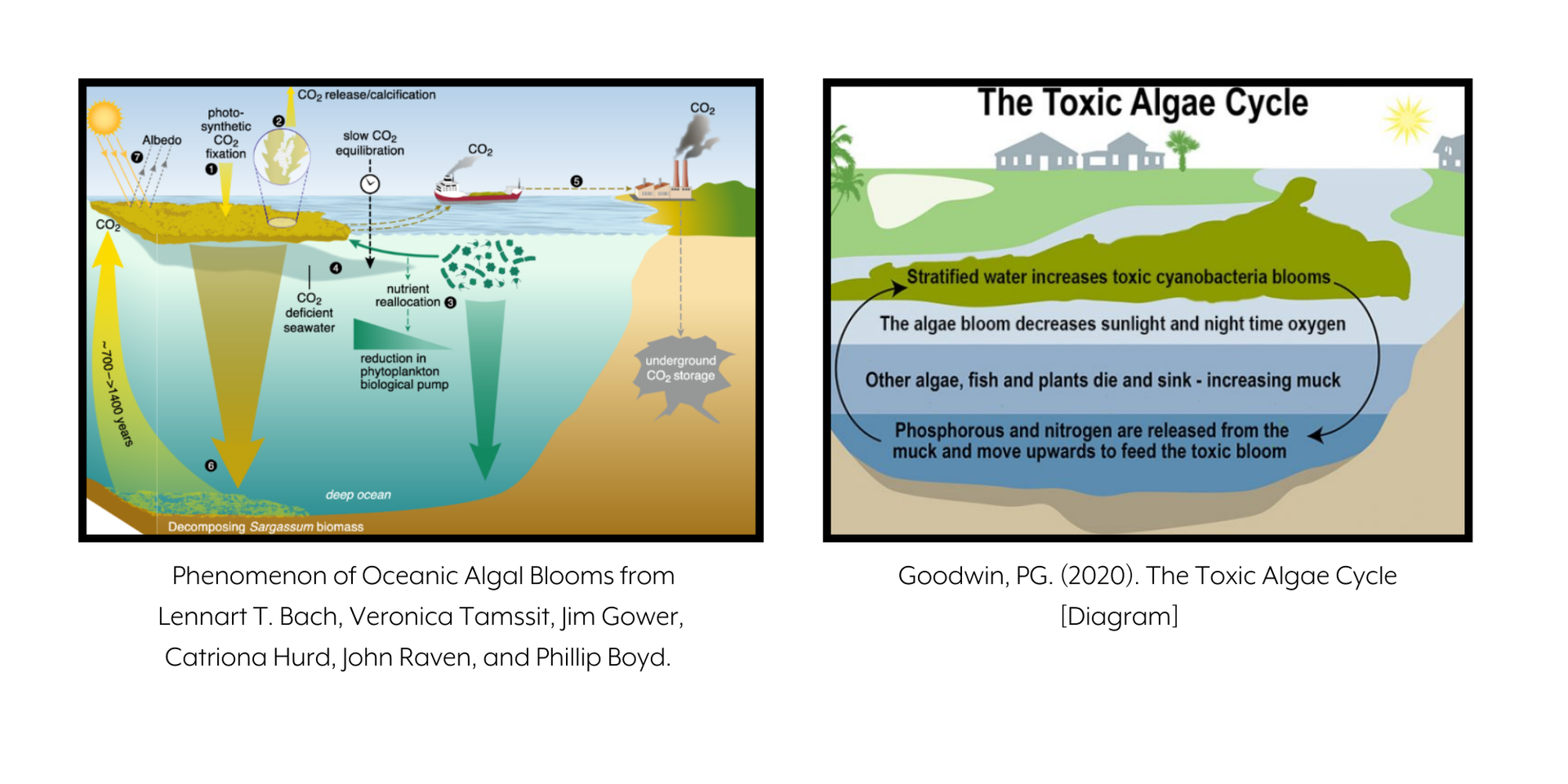
Midwestern Algae blooms
Focusing back onto the midwest, during August 2014, scientists noticed a Blue-Green algal outbreak on Lake Erie. High levels of Cyanobacteria caused Toledo, Ohio officials to enforce a total ban on drinking water to over 400,000 of its residents. Toledo grocery stores found themselves servicing residents who have driven hours from their homes to find bottled water, with some residents finding empty shelves! Lasting three days, this situation caused national guard involvement, lasting water insecurity, and news headlines. Lake Erie’s story is not one of coincidence, midwestern waterways that are at high risk of blooms are the totality of our Great Lakes “Erie, Michigan, Huron, Ontario, and Superior.
Blooming events like these beyond the Great Lakes have since become increasingly more common in rivers, creeks, and ponds. Residential neighborhoods and parks with waterway access have seen increases in environmental damage caused by these toxic algal blooms, becoming costly to states, residents, and our environment.
Hitting close to home, a major river at risk of rising algal blooms is the Mississippi River. One of our largest rivers here in the United States, connecting 32 states to the Gulf of Mexico’s
Dead Zone. Dead zones are places where bacteria use oxygen to consume excess nutrients, causing low oxygen levels (hypoxia). Rises in nutrients (Nitrification) can lead to the rise of harmful algal blooms, both in the midwest and coastally. Midwesterners are seeing
outbreaks along the Mississippi River, including the Upper Illinois River upstream from Starved Rock dam in 2018 and 2020. Other locations branching off of the Mississippi river are also seeing rising blooms, such as the Rock River.
27wkow released an article July 25th 2023 stating the Rock County Public Health Department found Blue-Green algae in Rock County waters, our very backyard! This led to
Rock Co Health issuing warnings for affected water and sensitivities, additionally increasing testing of local aquatic areas.
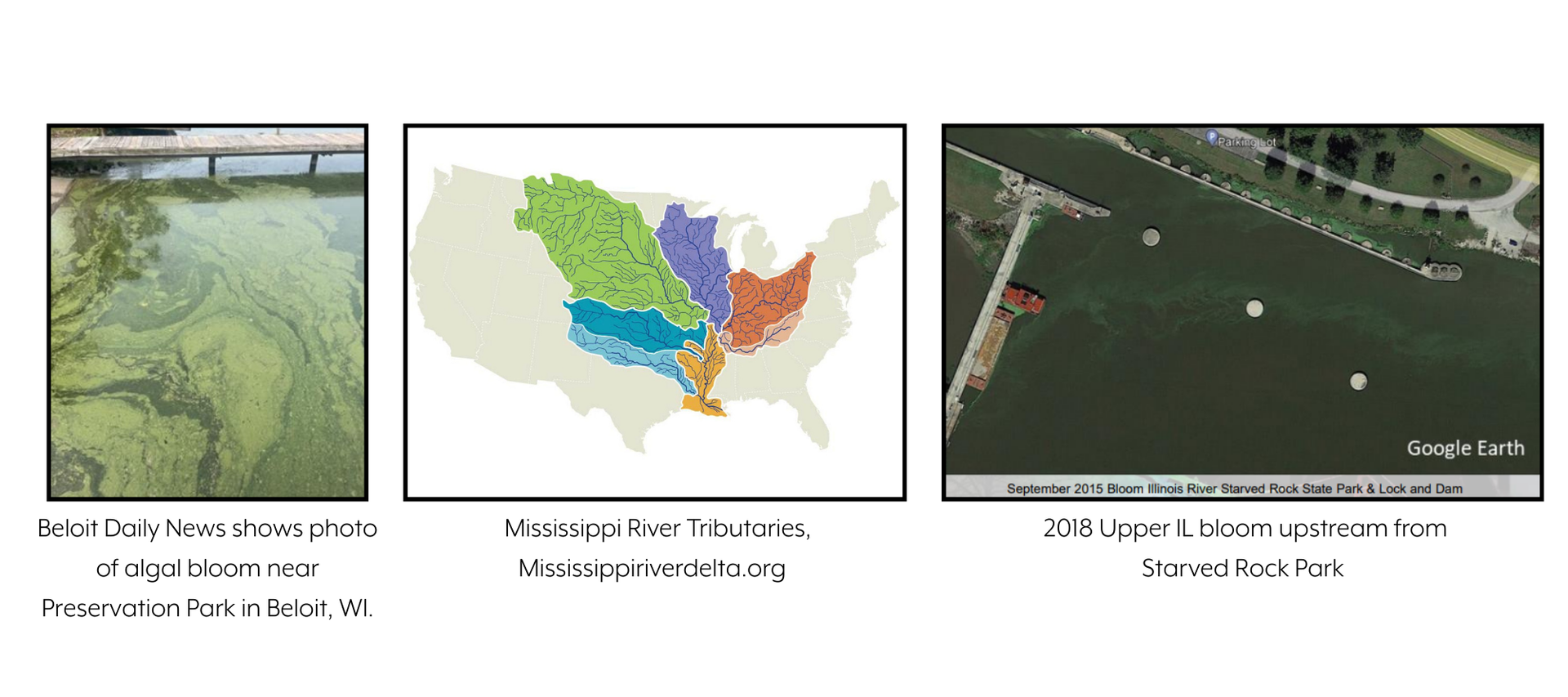
Algal blooms around the world
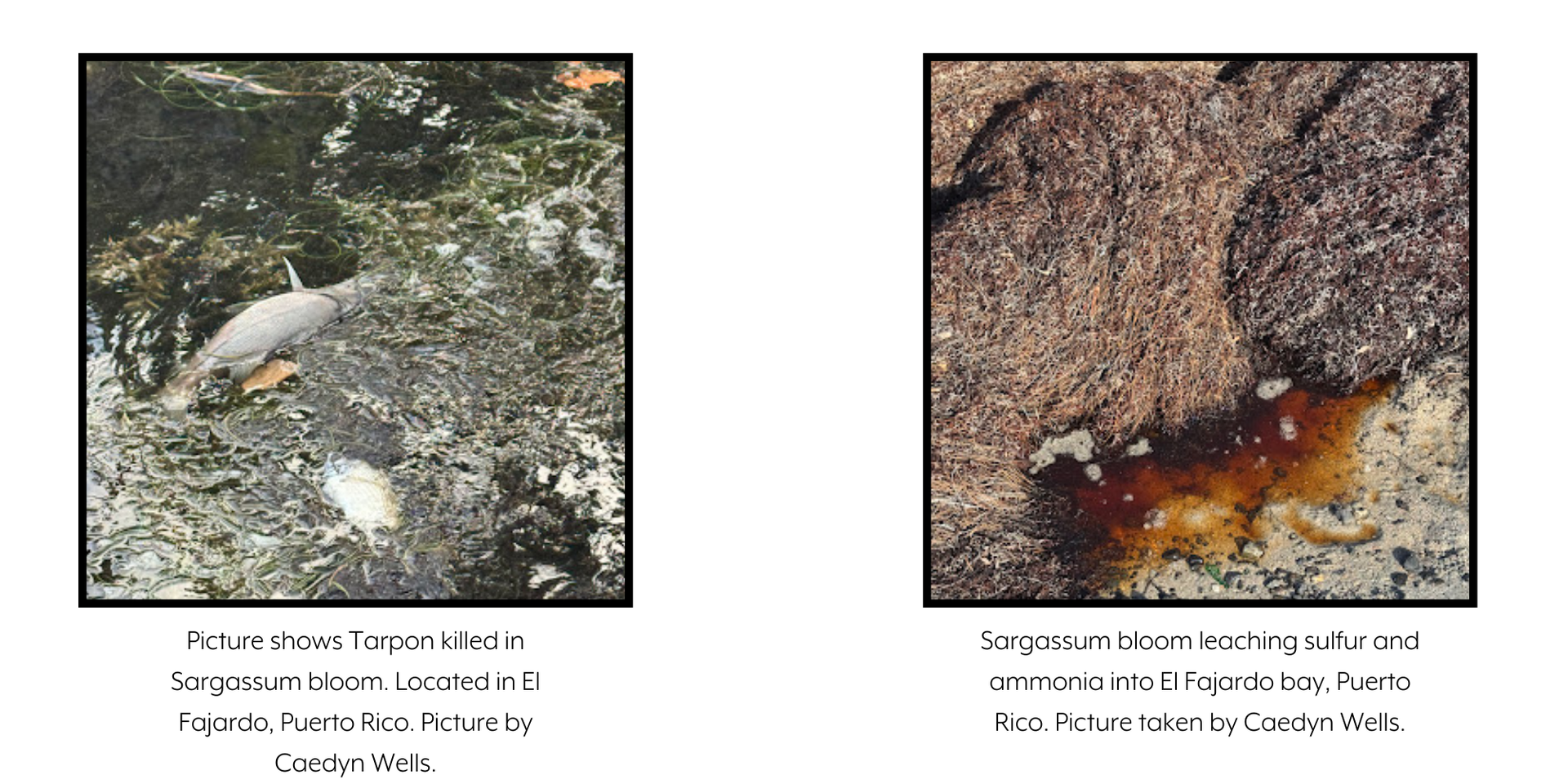
Often blooms in the midwest occur in shallow, warm, pollutant and nutrient rich water. Tropical algal blooms are different in comparison forming in various depths. However, global saltwater blooms are caused by Cyanobacteria present in both scenarios. Differences do exist for oceanic environments, with the addition of nutrients carried from the Sahara desert into the North Atlantic. Oceanic algal blooms are unique and can be caused by sargassum, a seaweed labeled as a brown algae which floats in large masses across the ocean. Sargassum is different from Blue-Green algae. Oceanic blooms are present through symbiotic relations held by both the sargassum and cyanobacteria present. Increased phosphorus available to cyanobacteria is caused by strong atmospheric winds sargassum is exposed to in open ocean, in return bacteria capture atmospheric nitrogen and convert it, using a process called nitrogen fixation. Cyanobacteria in return further colonize the Sargassum, where then sargassum will benefit from additional nitrogen produced.
You may have noticed Sargassum washed up on beaches when traveling to tropical environments. These blooms are becoming more common, causing major issues during decomposition. Sargassum that is decomposing is not only a horrible smell, it's an accumulation of nitrogen, sulfur, and ammonia caused by the decomposing Cyanobacteria that can ultimately lead to dead zones. Oceanic dead zones are important to monitor and mitigate due to marine life health and loss of fish populations that hurt our environment and fishing industries.
Algae bloom Interventions
Harmful blooms cost the government an estimated $64 million per year on restoration, conservation, surveying, data analysis, and mitigations. Involving state and federal agencies like the Environmental Protection Agency and Department of Public Health, which act as resources regarding blooms. The Environmental Protection Agency monitors and reports data regarding blooms having report forms and data publicly available, while the Department of Public health works with algal safety concerns and procedures.
NASA is another agency hard at work performing algal research and mitigation, utilizing
satellite imaging to monitor outbreaks. NASA’s goals to transfer data into a mobile application will allow the public, officials, and scientists to track water quality on a national scale. Satellites will work to obtain data by detecting chlorophyll and fluorescent light emitted by cyanobacteria in these harmful blooms, where scientists will then have the job of analyzing the data to be submitted into a mobile app called
Cyan App. NASA Admin
Charles Bolden commented on this success in 2023 mentioning “We're excited to be putting NASA’s expertise in space and scientific exploration to work protecting public health and safety". Years after NASA’s statement, the United States Geological Survey
(USGS) released a statement regarding harmful bloom variabilities, noting that the upper Mississippi River is at highest risk. Additionally, while mitigations are in place, there is still no consistent monitoring approach present in the U.S., especially in rivers.
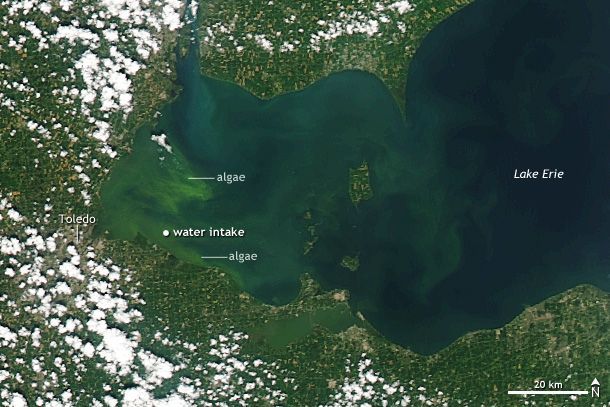
NASA satellite captured image of toxic algae bloom in Lake Erie on August 3, 2014
What can we do in the meantime?
When big issues arise it's normal for us to feel overwhelmed on how we can help, but there’s much we can do! Individually, we can begin to be mindful about the products we use and activities we do in the environment, checking a product or activities environmental safety is a huge step in keeping waterways safe. Some farms across the midwest have even implemented efforts to improve community water quality such as filter strips, grassed waterways, wildlife planning, and nutrient management plans. While our governments and scientists begin to introduce water safety management plans, and further research of bloom benefits. Positive benefits being researched include uses in biofuel, superfoods (spurlina), fertilizers, oxygen farming, and carbon sinks.
Even with mitigations in place, these blooms are still occurring and happening fast. Here are some great ways to keep you and your family safe if a bloom occurs near you!
- Avoid contact with discolored water often layered with scum or foam, if contact occurs wash yourself off as soon as possible. Note children and pets are at high risk.
- Be mindful of your water intake source, and never drink untreated water from any waterway or eat fish from affected bloom areas, and be alert of new updates on your waterways.
Our waterways both locally and globally are unimaginably valuable and vulnerable, affecting and shaping our environment, economy, and communities worldwide. Knowledge of how algae is a powerful plant is important for both its’ poor and adequate ways it interacts with our ecosystems. Rising issues such as (HAB) blooms, are a clear indication of our local and global waterway health, that we as a community can and are doing something about together!
RECENT ARTICLES