FIELD NOTES BLOG

Linda's Intro Blog

Linda Sandquist
April 11, 2025

Introducing Linda

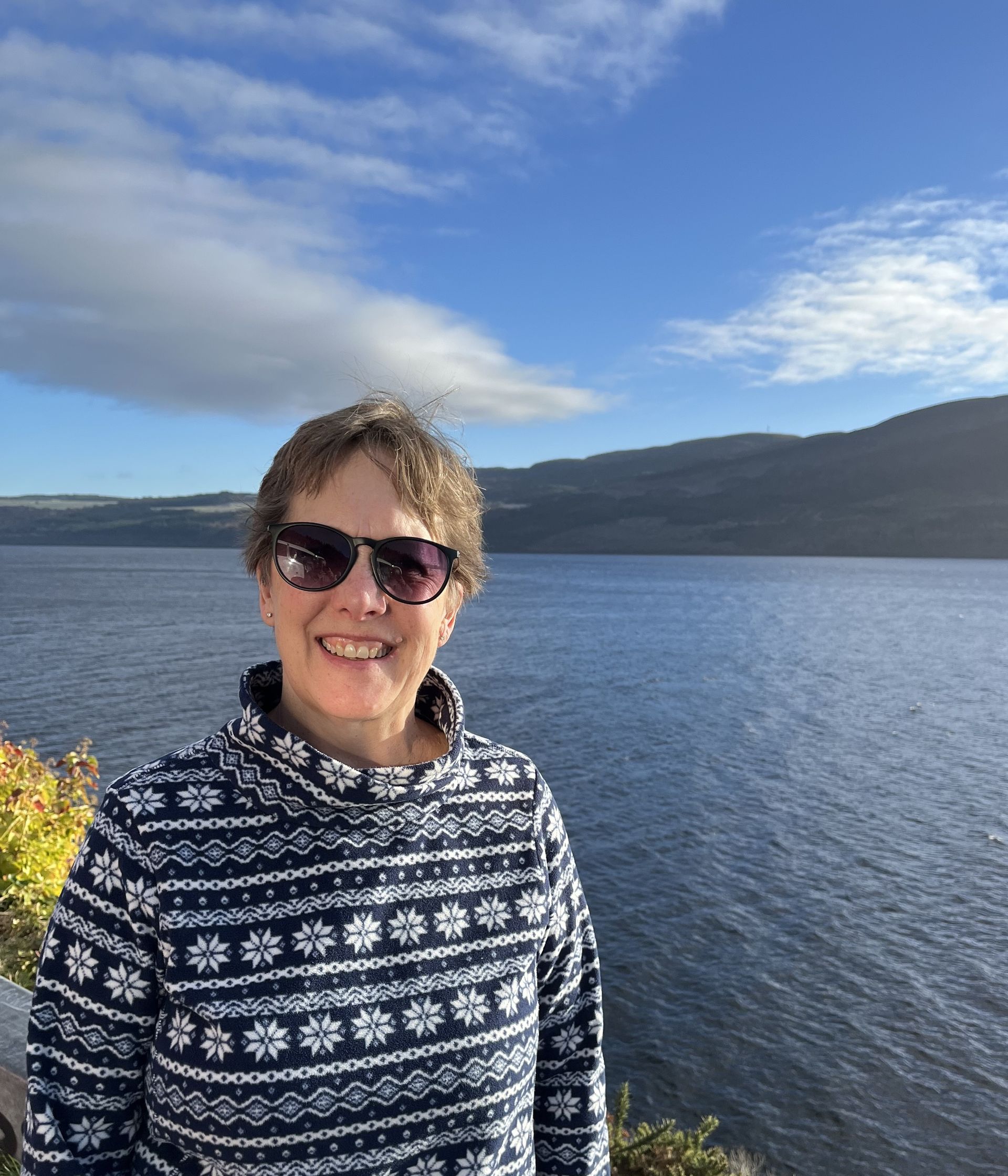
My name is Linda Sandquist (she, her) and I am so happy to be the new Director of Development here at Severson Dells Nature Center. As a lifelong Rockfordian, my passion is helping make Rockford a thriving place to live.


My first exposure to nature education happened when I was a chaperone for my daughter's 2nd grade winter field trip. I remember being a little nervous about a walk in the woods with a group of 8 year old kids at a place I had never visited. I also remember how great the staff was, how much the kids enjoyed their visit, and how invigorating it was to be out in nature on a winter's day. I'm embarrassed to say that although I had discovered the magic of the outdoors, my family and I never truly took advantage of what Severson Dells had to offer.


Fast forward  23 years and my granddaughters, Joanna and Ruby, were exposed to Severson Dells when their other set of grandparents brought them to Pollinator Palooza. They loved it! Their delight and my blossoming appreciation of nature and the outdoors served as the impetus for me to apply for the development position here. I am blessed to be part of the dedicated team who works to bring nature education and activities to over 10,000 people each year. I'm inspired to steward the donors and supporters of Severson Dells and share the impact their financial support makes. Most importantly, I am dedicated to ensuring that all families have the opportunity to take advantage of the wonders of Severson Dells and I look to the future when we will be able to offer nature education on the east side of Rockford. I look forward to building this magic together with you.

RECENT ARTICLES
By Emma Zimmerman June 11, 2026
The ocean, and all of the water in it, is constantly in motion. Though it may sometimes appear calm on the surface, enormous currents continuously move ocean water around the globe like a giant conveyor belt. These currents regulate weather, move nutrients across ecosystems, and shape the climates of entire continents. Currents on the surface of the ocean are controlled by the wind, but deeper in the ocean currents are controlled by water density in a process known as thermohaline circulation . Thermohaline refers to the temperature (thermo) and salinity, or saltiness, (haline) of the water. Circulation refers to how the water moves throughout the ocean from pole to pole. Though this is a complicated sounding word, the process is actually pretty simple. Here’s how it works: As ocean water travels toward the poles it becomes colder, and when it gets cold enough, it eventually begins to freeze and forms into sea ice. What is important about this process is that when seawater freezes, the salt is left behind in the surrounding water. As a result, the surrounding water becomes saltier, colder, and in turn becomes more dense than the water around it. Eventually, this water becomes dense enough to sink deep into the ocean, and warmer surface water moves in to replace it. This process of freezing, melting, and replacement continues on and on, resulting in a continuous cycle of moving water that forms deep ocean currents, often referred to as the “global ocean conveyor belt.”
By Emma Zimmerman June 4, 2026
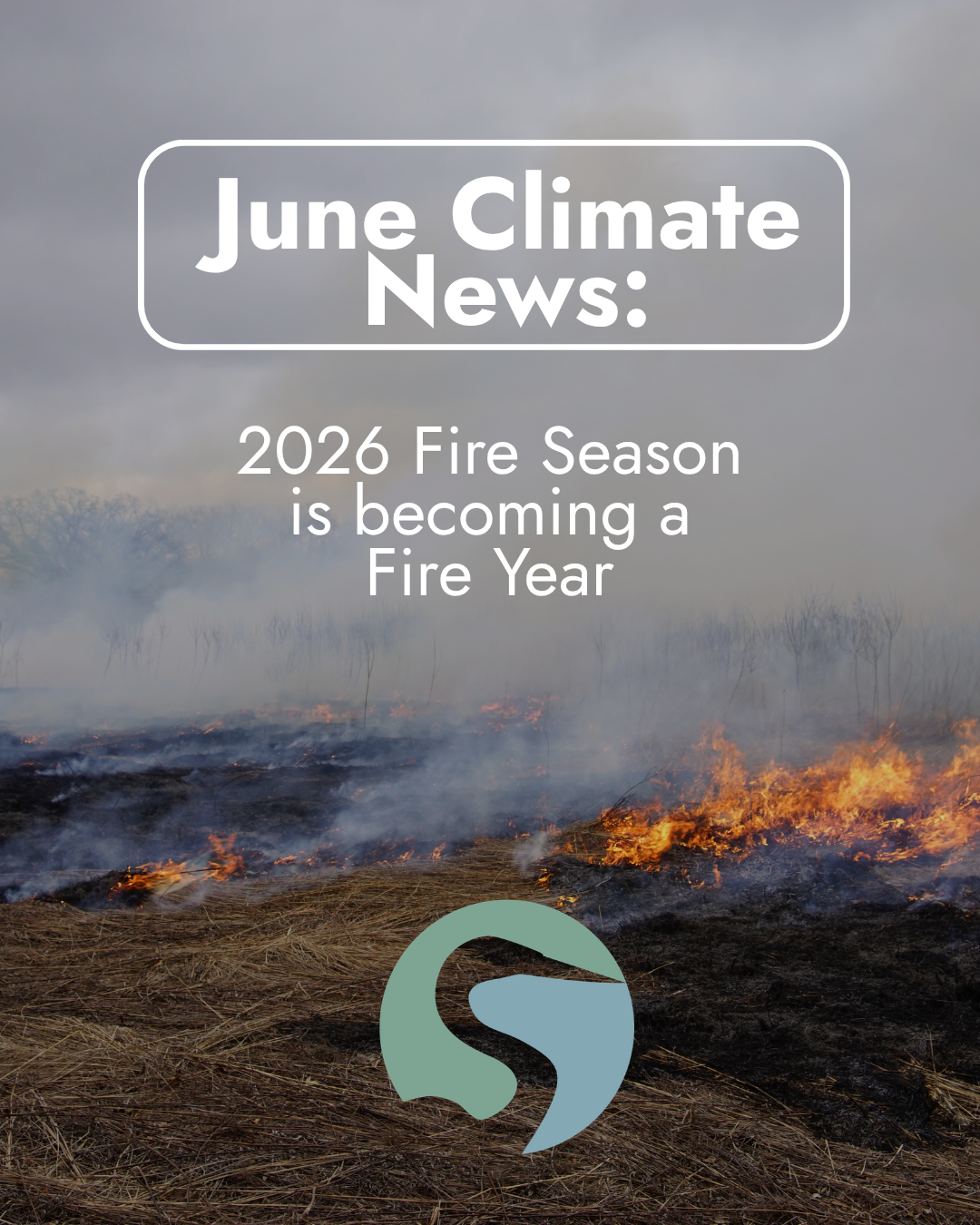
Experts are warning that 2026 may bring a record wildfire season to the United States, so severe that many researchers and fire agencies are no longer calling it a “fire season” at all. We are off to such a start that experts are now referring to it as a fire year. Traditionally, the wildfire season in the United States peaks between May and October, but we have seen many fires throughout the southern and western United States already this spring. Most major fires occur in western states. However, impacts from wildfires can be felt across the entire country, including here in northern Illinois. Wildfire smoke can travel hundreds or even thousands of miles, affecting our air quality here in Rockford. Maybe you recall the hazy skies and dangerous air quality alerts from the last few summers caused by fires burning far away in Canada. Unfortunately, these days are not going away, and if anything, we should expect more of them in the future. So why is this year a “fire year”, and why are experts concerned? Let’s dig into it.
By Olivia Price May 28, 2026
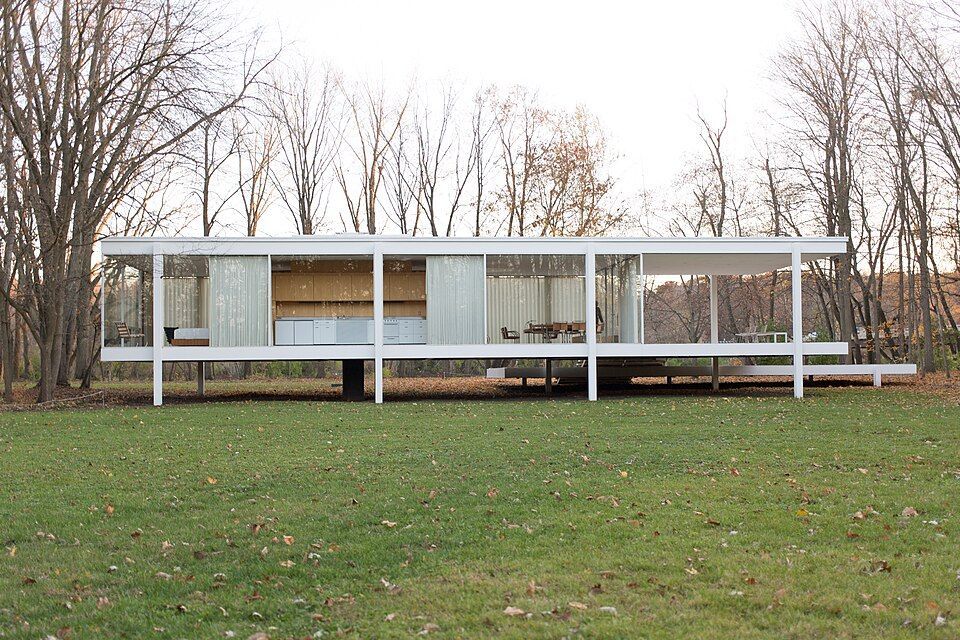
Nature and Architecture in Northeastern Illinois