FIELD NOTES BLOG
It's Time for a Whimsy Walk
“I want to think again of dangerous and noble things. I want to be light and frolicsome. I want to be improbable, beautiful, and afraid of nothing, as though I had wings.” -Mary Oliver
When was the last time you felt frolicsome and afraid of nothing? As adults, there are so many things tearing away from the present. Bills, appointments, meals, texts, and to-do lists flurry around our mind. Even if we carve out time to take a walk out in nature, it takes a while for us to shed the ties to our stresses and enjoy the nature we came out to visit.
I would like to offer some tools to help free your mind on your next walk in nature, and better yet, invite your inner child out to play. I have ordered these prompts from easy to hard; easy being “I can do this on the trail and no one will even notice” and hard being “this is what I would have loved as a kid! Who cares who sees?”
This is the kind of walk for frequent mediators and I-rarely-slow-down-enough-to-reflect folks alike. The physicality of these activities will help you stay engaged with the beauty of your surroundings and distance you from the to-do list at home.
Let’s try a whimsy walk.

Walk with the pace wind.
The wind is always asking us to play, but we hardly listen. Before you begin, plant your feet firmly on the ground and feel the way the breeze blows between your fingers and tugs at your hair. Let it travel up your nose and fill your lungs before slipping out of your mouth. Once you are well-acquainted with the force of the wind, begin your walk. Sink into a slow pace as you feel the wind ebb and rush when a gust pushes past you. Think of it like a ballroom dance where the wind is dictating your pace and it’s your job to follow!
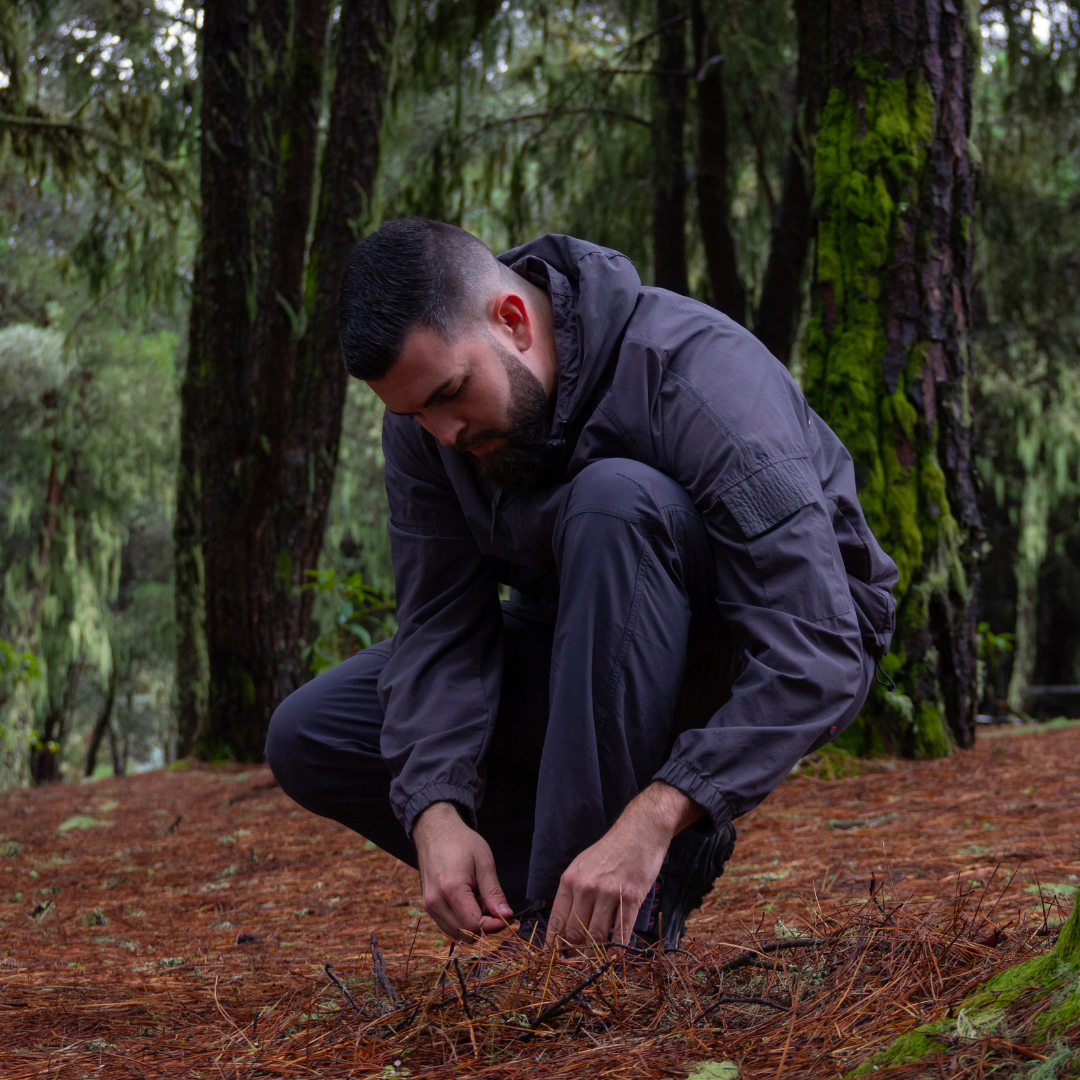
Find the biggest and the smallest. When you reach a special spot- whether it is an overlook or a simple turn on the trail- stop! Let your gaze drift around you and fix your eyes on the biggest thing you see. Imagine your body swelling and filling a space so large! Now bend down and get low to the ground. You can pretend to tie your shoe if you need to have an excuse. Look for the smallest possible thing, and no, that blade of grass doesn’t count. Is it a speck of sand? The eye of an ant? Imagine how thrilling a forest of grass would be to that ant. How does that make you feel about your size and scale in the world?
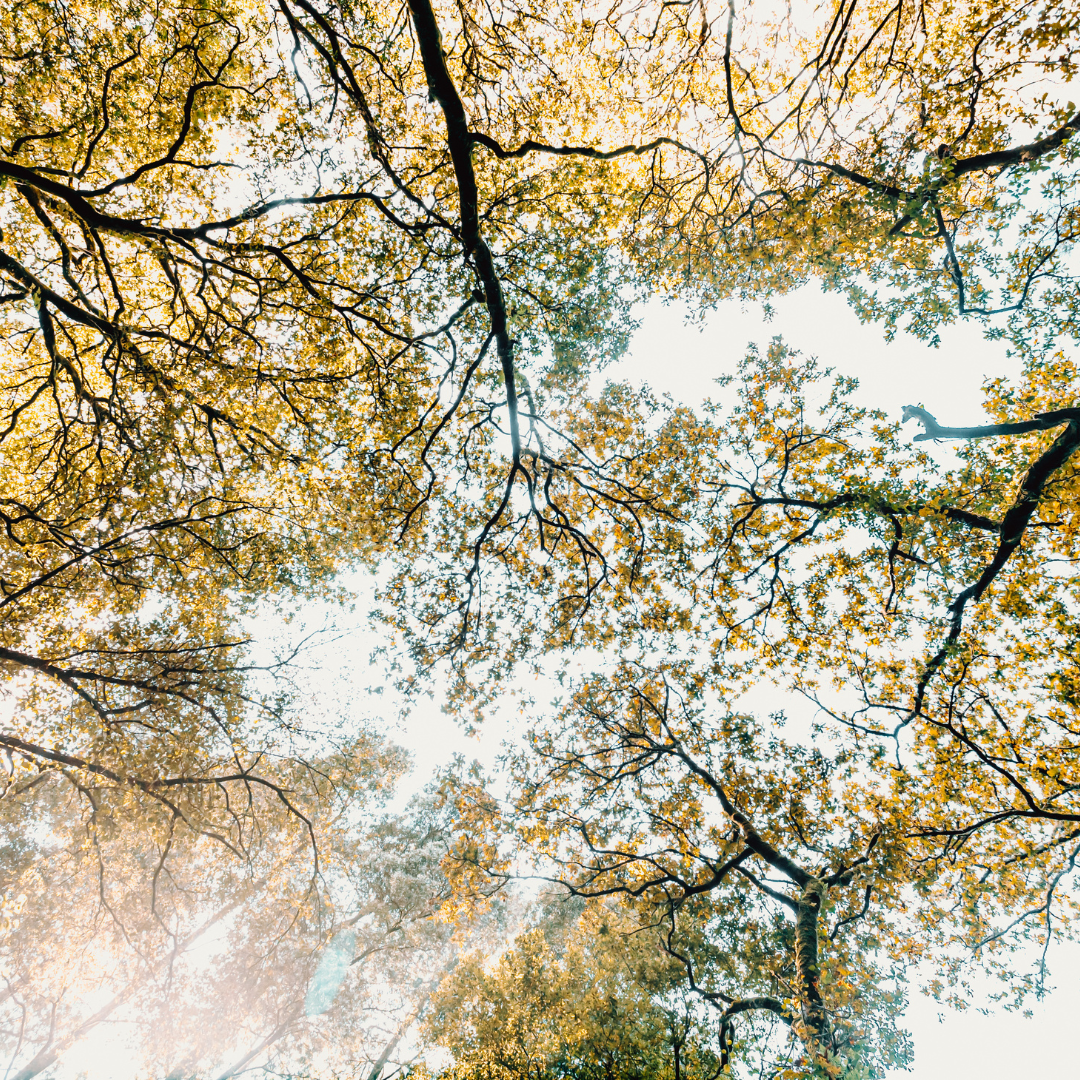
Learn how to pose from a tree. Let yourself come to a stop. Now look up! You can pretend to be looking at a bird if you want to look distinguished or official, but what I want you to do is start scanning the trees above you. Look at their little branches splayed like fingers, bent like wrists and elbows, swaying in the wind like arms. Find your favorite section of canopy and bring your arms above your head like you are doing an actual stretch. Don’t do one of the silly stretches from gym class, though! Arrange your arms above you and match the canopy of the trees. Let your breath rise and fall like the breeze to help your new branch-arms move like the trees above you. How wonderful does it feel to reach up to the sun as they do?
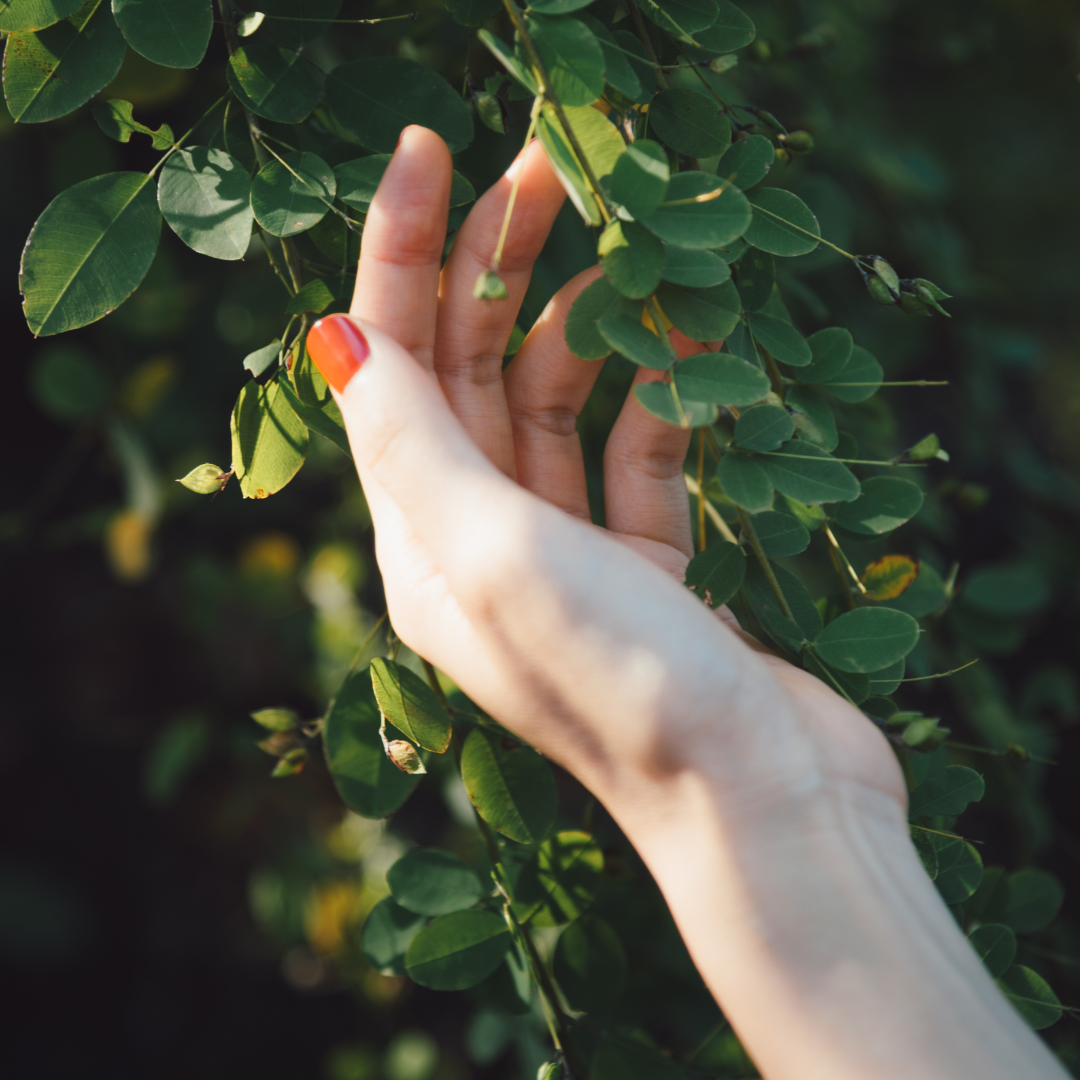
Shake hands with leaves and flowers. I need to start with a disclaimer: be sure you know how to identify our common no-touch plants before you start. They include poison ivy, the angelicas, stinging nettle, and even the spring ephemeral mayapple. These plants are exempt from this activity! Start by drifting your fingers along leaf edges. Let them leap above the lobes and buzz over the serrated teeth. Swirl your fingers through a cluster of leaves and let them skip from one patch to another. Pretend that each touch is a greeting and each contact a handshake. Look at how many new friends you have met!

Lay on the ground and find the heartbeat of the earth. This is a top-tier challenge because you will have to lay on the ground. There’s no way around it! Press your chest against the earth and turn your head so that your ear forms a sort of seal against the ground. Breathe in and out with the blades of grass dancing in the breeze, now at your eye level. Listen! What are you starting to hear? A distant thunder, a gentle thump? Some people would say that is your heartbeat. They aren’t wrong! Some people would say that’s the earth’s heartbeat. If you have completed all of these activities, I bet you would agree, our heartbeat and the earth’s are one in the same.
RECENT ARTICLES