FIELD NOTES BLOG
Emma's Farewell


When I started at Severson Dells nearly two years ago, I never would have believed I’d still be here today. What was supposed to be a short detour turned into one of the meaningful positions I have served. These years have flown by, and as I sit down to write this farewell, I keep circling back to my early days here. It feels important to revisit that beginning, because in so many ways, it shaped everything that followed.
To back up a bit: it was never my intention to return home to Illinois, for work or for much of anything, really. For as long as I can remember my dream has been to move to the Pacific Northwest. So, the day after I graduated college, I packed up my Honda CRV and drove west to Washington State. When I later accepted a short-term position at Severson Dells, it was meant to be just a stepping stone while I figured out my place in environmental work. A quick six months, and then back to the mountains. Life, however, had other plans.
Severson Dells met me at a very interesting time in my life. While working in Washington just prior to coming to Severson, I was in a freak accident and I fell off of a cliff, shattered my leg, and suddenly found myself back home to Illinois for the foreseeable future. Driving east, I dreaded it. I missed the mountains, the forests, the ocean, and on top of that, I couldn’t even walk. It felt like I had hit an all-time low. I’ll never forget hobbling into Severson Dells for the first time, struggling with the front door on my crutches, and wondering if I had made a terrible mistake coming home and taking this position. But then I walked into the nature center, and that fear quickly melted away. I was met with kind faces and genuine welcome. What I didn’t realize at that moment was that this place, and the people who fill it, would teach me more about resilience, community, and the power of connecting with nature than I ever could have imagined.
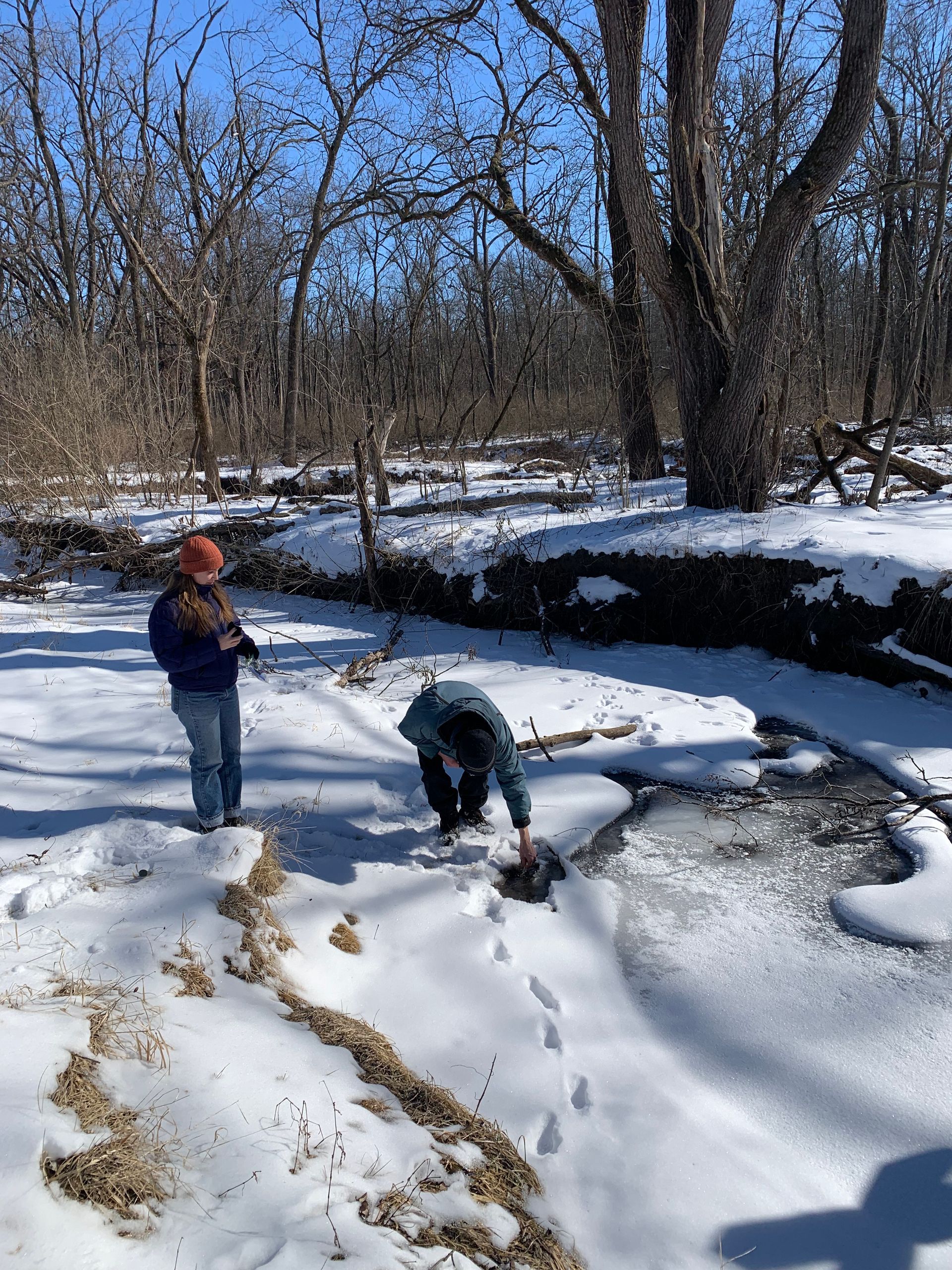
I want to pause here to talk about accessibility. Until that point, I had never needed accommodations, and suddenly, I needed a lot of them. If you know the environmental field, you know accessibility isn’t always easy to come by. Environmental work is notoriously physical, something I loved about it, and with my new limitations I didn’t know how I would fit in. But my worries were short-lived, because everyone at Severson made sure I had what I needed to succeed. From helping set up lessons, to guiding hikes when I couldn’t, to Liz and Jillian literally pushing me in a wheelchair around the paved loop so I could actually see the pond I was teaching about, everyone went out of their way to help me. I never once felt like a burden, I only ever felt supported. That kind of care is rare, and I’ll always be grateful for it.
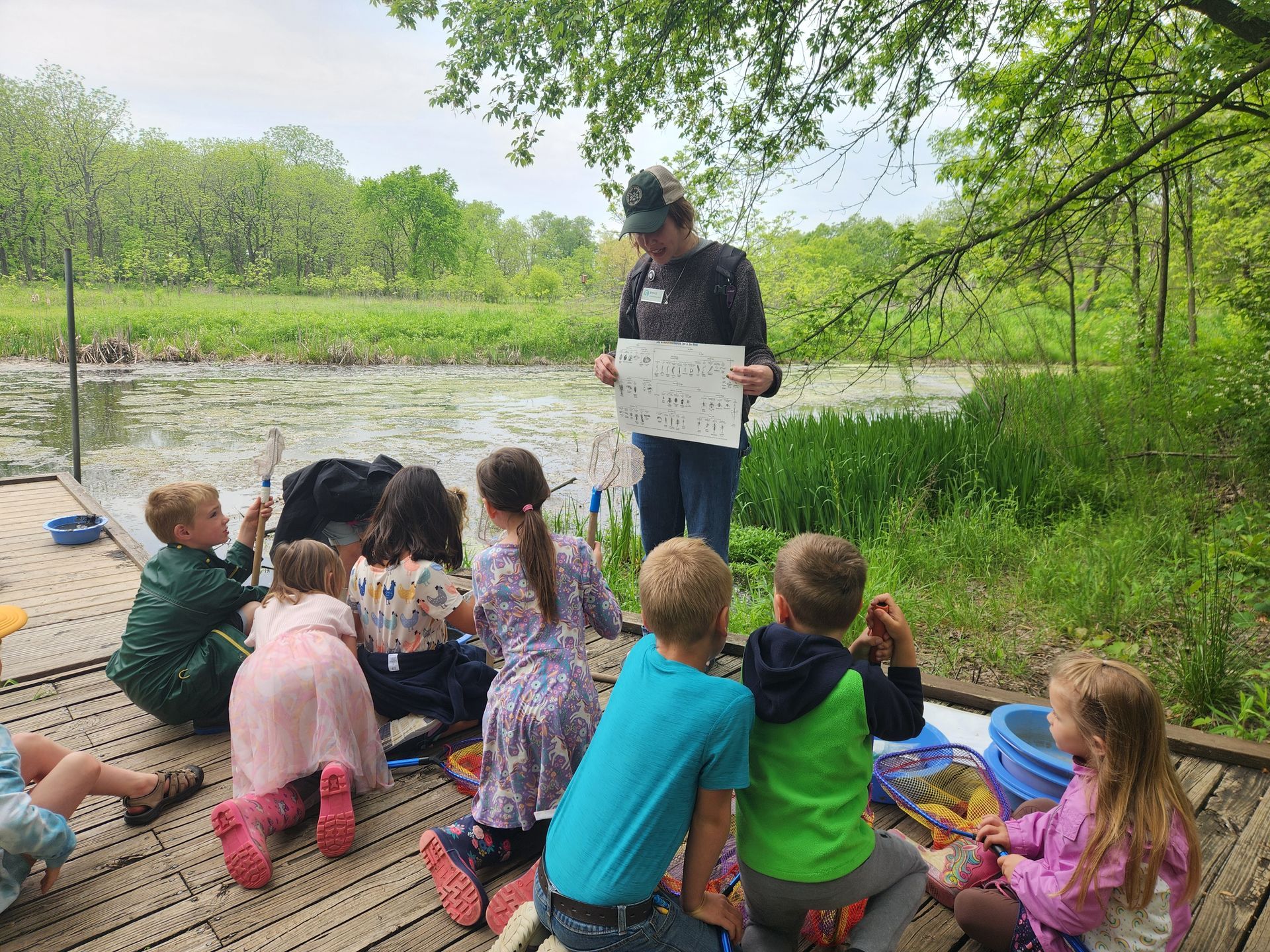
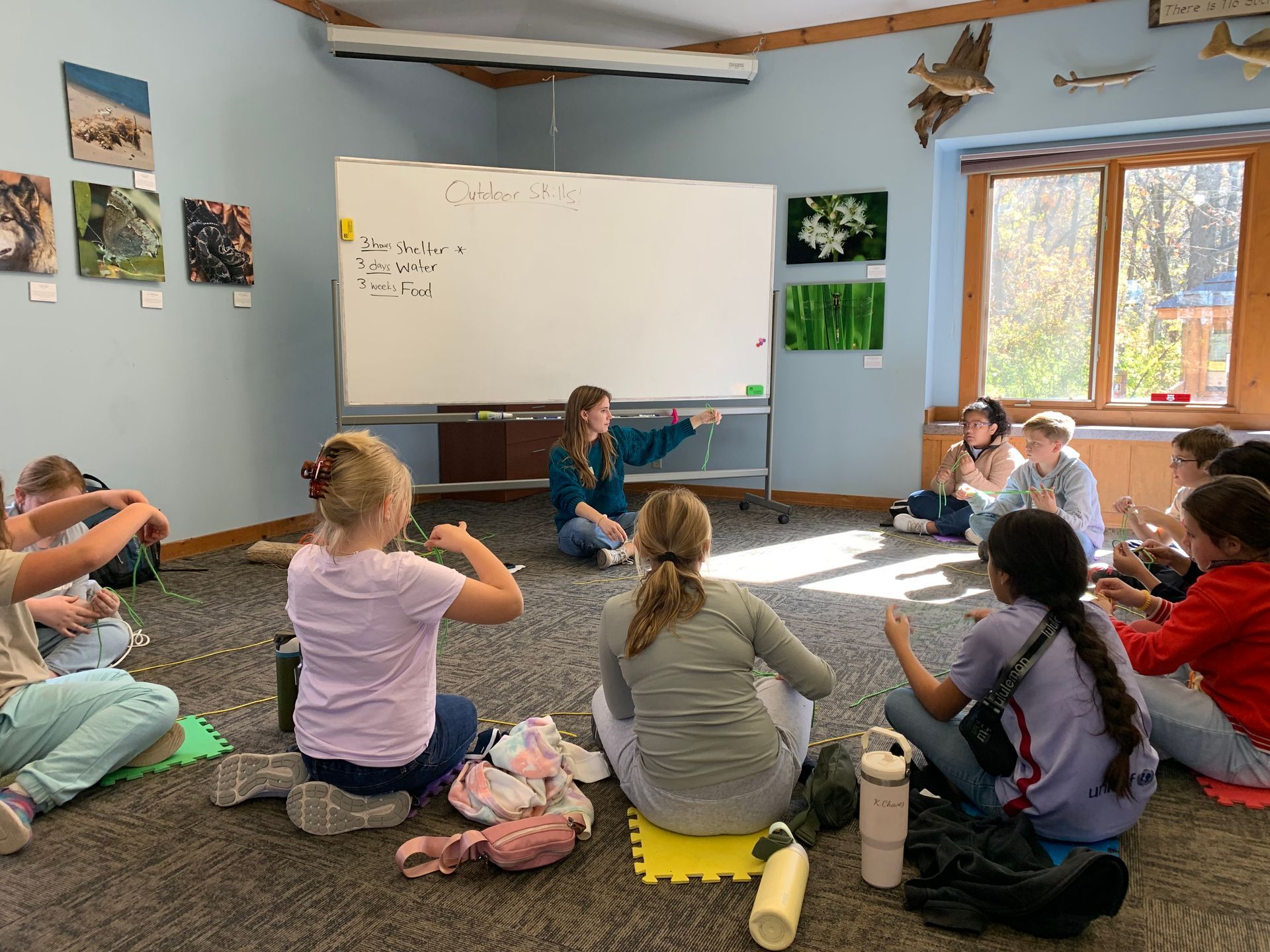
During my time here, I’ve had the chance to wear a lot of hats (and sometimes costumes, too). I started as an education AmeriCorps member in 2023, leading field trips, homeschool lessons, and public programs, teaching kids about everything from prairie plants to creek critters. In 2024, I transitioned into a community science role, where I observed frog calling phenology, monitored salt concentrations in our waterways, and led restoration workdays with a wonderful team of volunteers. Along the way, I wrote educational blogs, created silly Instagram reels, and helped with events that brought the community together in the name of nature. These days, I’ve landed in the “other” category, a blend of community science, education, and “other” that included (but certainly wasn’t limited to): museum curation, short film directing, walking through cornfields at night to listen for frogs, and dressing up as a pirate to canoe one-handed around the pond for our summer camp.
Somewhere in the middle of all that, Severson taught me a few life lessons too. I learned what kindness in the workplace looks like. What it feels like to be part of a truly collaborative, supportive, joy-filled community. For the first time in my life, I looked forward to work every single day. And I can confidently say there wasn’t a single day I didn’t laugh until my stomach hurt. I made lasting friendships, learned from our land, and, most importantly, I learned from the community that makes Severson what it is.
Another gift Severson gave me was a new love for the Midwest. For most of my life, I resented the flat fields and endless cornrows of Illinois. I thought I needed mountains to feel awe. But teaching about the prairies and woodlands here taught me to see their quiet beauty, too. Watching the prairie shift through the seasons became a lesson in patience and resilience, one I especially needed, given the circumstances that brought me home. I now see the Midwest not as something to escape, but as something to cherish. There’s a quote by Willa Cather that says, “Anybody can love a mountain, but it takes a soul to love the prairie.” Thank you, Severson, for helping me find that part of my soul.
As I move on to my next chapter, I’ll carry the memories, the laughter, and the lessons I’ve learned here. This place, and the people who make it what it is, have shaped me in ways I’ll never forget.
Thank you for everything, Severson Dells.



RECENT ARTICLES