FIELD NOTES BLOG
May Bird Blog
With spring in full swing, we will soon have our full repertoire of avian species present in Winnebago. So between our migrant species and those whom we share a home with all year, we will have a plethora of sightings with this I want to bring your attention to a selection of species of both varieties.
Mallard -
Anas platyrhynchos
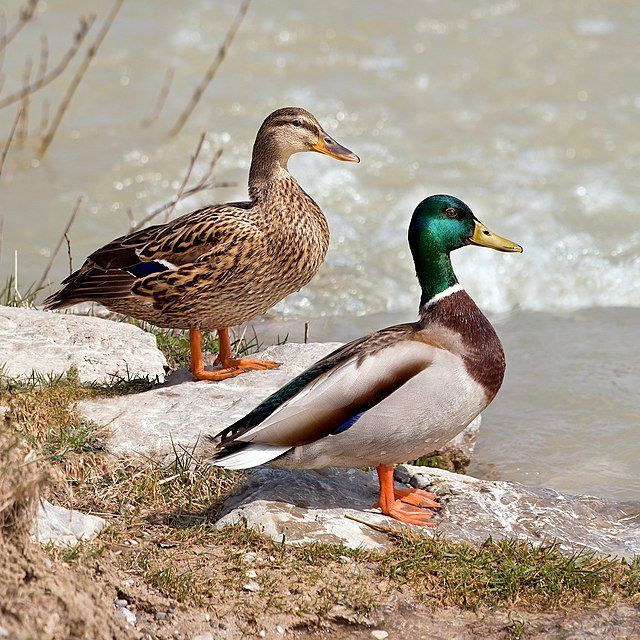
When one thinks of a wild duck it is nearly certain that the first species they’ll think of is the Mallard. This is one of the most widespread. Common habitats for them include wetlands, rivers, lakes, and park ponds; really anywhere that has water present. There is serious sexual dimorphism present with females being a mottled brown and tan while possessing orange bills and feet. Males on the other hand are more colorful with a brown breast, gray belly, a white collar, iridescent green head, orange feet, and a yellow bill. Both sexes will possess an area of iridescent purple-blue feathers with white fringe, called a speculum, on the wing. Mallards pose a significant threat across the world as they have a unique superpower to be able to successfully hybridize with other duck species, which messes with those species’ gene pools. Mated mallards pair up in the fall and spend their winter together until the female lays her eggs, in which case the male will abandon her so as to not draw too much attention to the nest with his bright colors. Mallards are the ancestors of nearly all domestic duck breeds, save for the Muscovy, and have a long storied history with humans in the form of food, feathers, and pets. You can hear their vocalizations here.
Downy Woodpecker - Dryobates pubescens
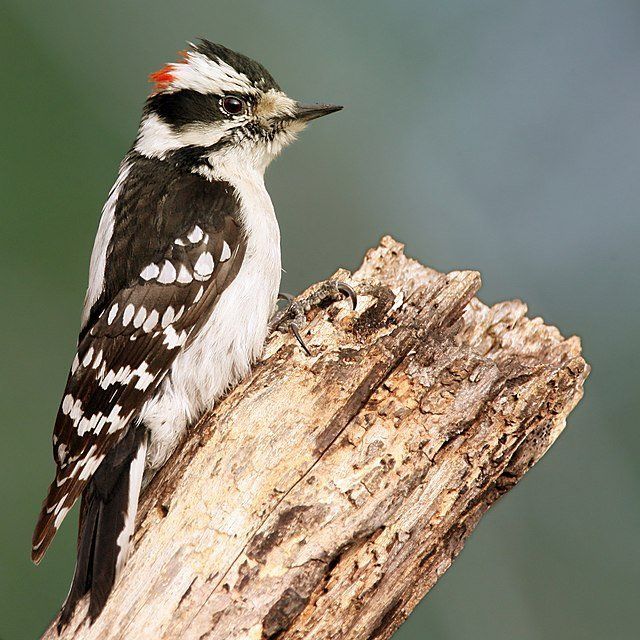
We present to you the smallest of North America’s woodpecker species. As stated before it is quite small, being only about 5 - 7 inches tall and having a wingspan of only 9 - 12 inches. This is an important identification feature as they are nearly identical to their large relative the Hairy woodpecker. Downy woodpeckers have a solid white belly with three black lines on their cheek, eyes, and cap. Their wings and tail are black with white spots and white barring respectively. Males possess a red spot on the back of their heads and have more pronounced bristles on their beaks. The birds are year-round residents of the deciduous and coniferous forest of northern Illinois, meaning that you get to see them snow or sun, rain or shine. They are consistent visitors of bird feeders especially those that contain suet even though their diet mainly consists of insects in the wild. Sound-wise they can be identified through either their whinnying vocal call or their steady, rapid drumming that can be heard here.
Red-shouldered hawk - Buteo lineatus
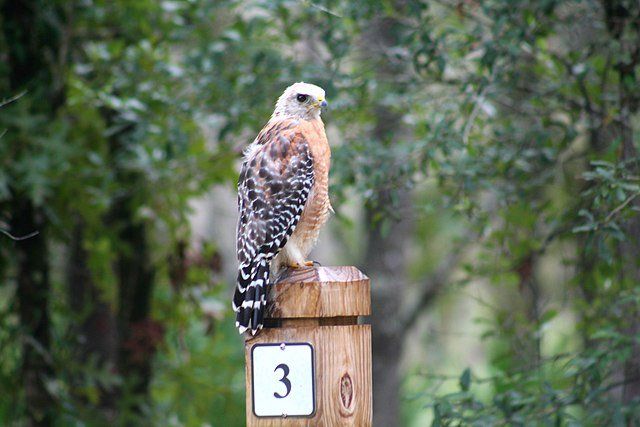
These birds are probably the 3rd most common species of hawk in Winnebago, following the red-tailed and the Cooper’s. Unlike their large cousin, the red-tailed, they prefer to live in forested areas and wetlands, as well as in suburban areas, instead of more open habitats. They are generalist predators who eat a wide variety of small mammals, reptiles, amphibians, and birds. They will become more commonly sighted in Winnebago as the weather continues to warm as many of the individuals and breeding pairs in our area are migratory and spend their winters in the southern United States. This will be especially true from April to July when they’ll be nesting across the region, including Severson Dells. Their most striking feature is their coloration, notably the reddish-brown feathers that are present on the head, breast, bellies, shoulders, and legs; with the reddish areas on the legs and belly being barred. In flight, they are easily recognizable with heavy black and white barring on the wing and tail feathers. Moreover, the titular red shoulders are more vibrant with the backdrop of sunlight. They are also noticeably smaller than red-tails when perched. Their call is a loud “kee-aah” which they screech in repetition as heard here.
Ring-billed Gull -
Larus delawarensis
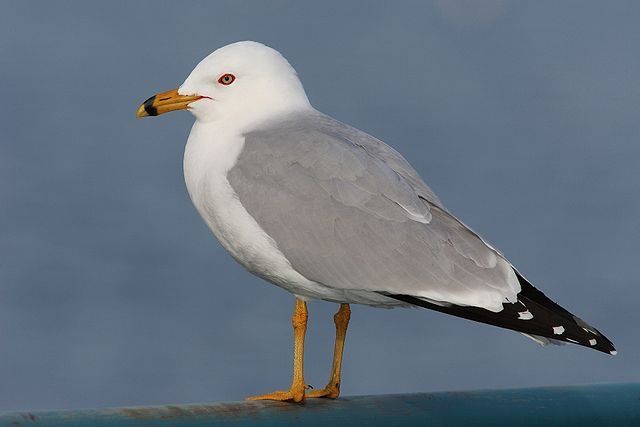
Their colloquial name of “seagull” might make you believe that they are absent from our continental region, but that name is a fallacy as ‘gulls’ are associated with many of our large bodies of water. One of the most common gulls is the ring-billed gull due to their adaptable diet and their comfort around humans. They can be commonly seen flying over large lakes and rivers in the country during their northward migration in May; though they can be seen year round in Chicago and its suburbs. You might even find nesting pairs in some of our areas, but I doubt they'll be visiting your feeders. Their appearance is quite stereotypical amongst other gulls with a white head and belly, gray wings and back, with a black tail hosting white spots. The most iconic aspect of their look is the black ‘ring’ that runs vertically on the beak of the bird. Adult birds are ludicrously noisy and have a varied repertoire of sequels, squawks, and exclamatory notes. Hear some for yourself here.
Summer Tanager -
Piranga rubra
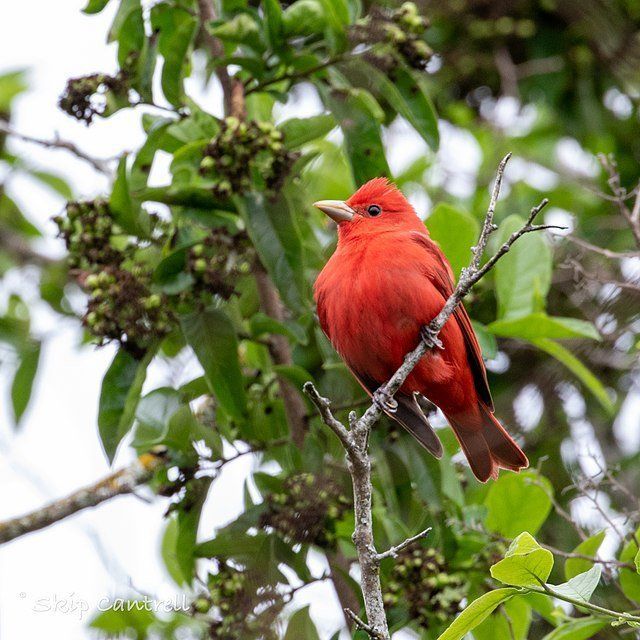
MALE SUMMER TANAGER CORPUS CHRISTI TEXAS BY T. CANTRELL
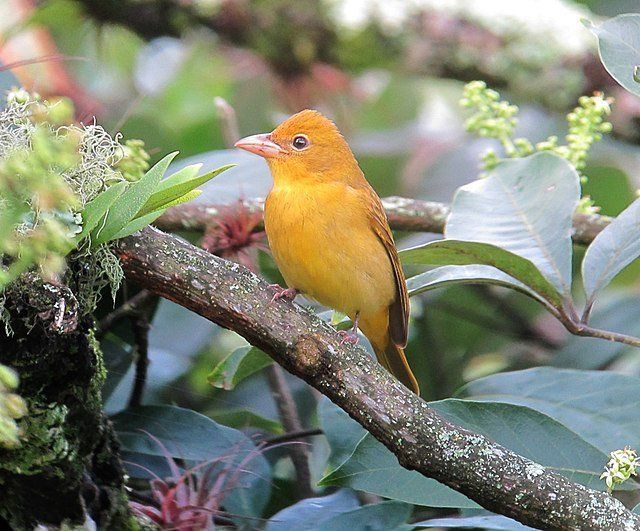
This bird holds the distinguished title of being North America’s only all red bird. Due to the males entirely strawberry colored body, save for their eyes and bill. There is major sexual dimorphism in regards to coloration with females being far from red and instead being mustard yellow with olive wings. They are relatively medium sized songbirds coming in at about 7 inches in length and having a wingspan of about 12 inches. Their bills share the same generalist shape shared by many other birds such as robins, thrushes, and other tanagers, but are a little bit more broad. These birds are quite the rare sight in Winnebago county as we sit on the far northern fringes of their summer breeding range with them preferring to spend their summers directly to the west and south of us. To add insult to injury these birds are often out of sight as they forage high in the forest canopy and rarely come to bird feeders as their favorite food are bees and wasps. Their call is very distinctive with a robin-like song interlaced with the muttering of pit-ti-tuck call as heard here.

RECENT ARTICLES