FIELD NOTES BLOG
Flights of Fancy: Bird Bonanza, December 2
This fall, Severson Dells Nature Center saw the return of a beloved program, the monthly Science Saturday! This event has welcomed over 700 people to Severson Dells since returning in September of 2023. Thanks to the generous sponsorships of Collins Aerospace and Nicor Gas, Science Saturday has been able to bring in experts from UW Madison, Northern IL Raptor Rehab Center, Sinnissippi Audubon, the Monarch Conservation Society, and more. Participants of all ages have made crafts, tried their hands at predator challenges, and ignited a curiosity for science! But, we aren’t done yet! The final Science Saturday of 2023 will be on December 2, and it is sure to be a great time! Join us for the Bird Bonanza!
Not to be outdone by the Saturdays before it, Bird Bonanza will have a little something for everyone to “tweet” about. All ages will enjoy spreading their wings and soaring to new heights.
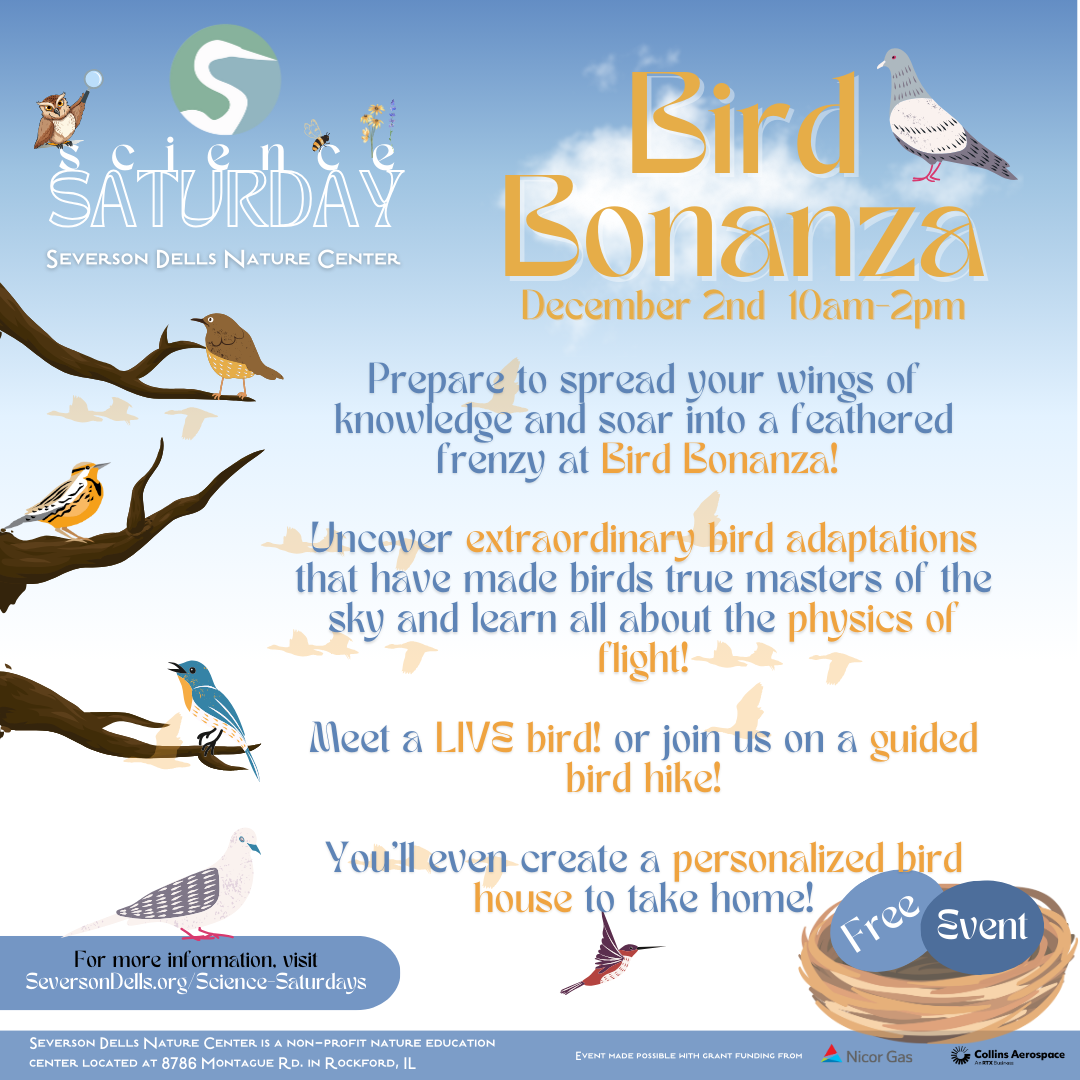
Join Severson Dells AmeriCorps members to learn about bird beaks, feet, and feathers. Get an up close look at these amazing adaptations that make our feathered friends so special! You’ll also be able to decorate a miniature bird house to take home!
Are you interested in getting out on the trails and learning about how to use binoculars and spotting birds? Join Don Miller and Kevin Kaltenbach for a short birding hike around the Severson paved loop. They will lead two hikes throughout the day, and each will last about 30-45 minutes.
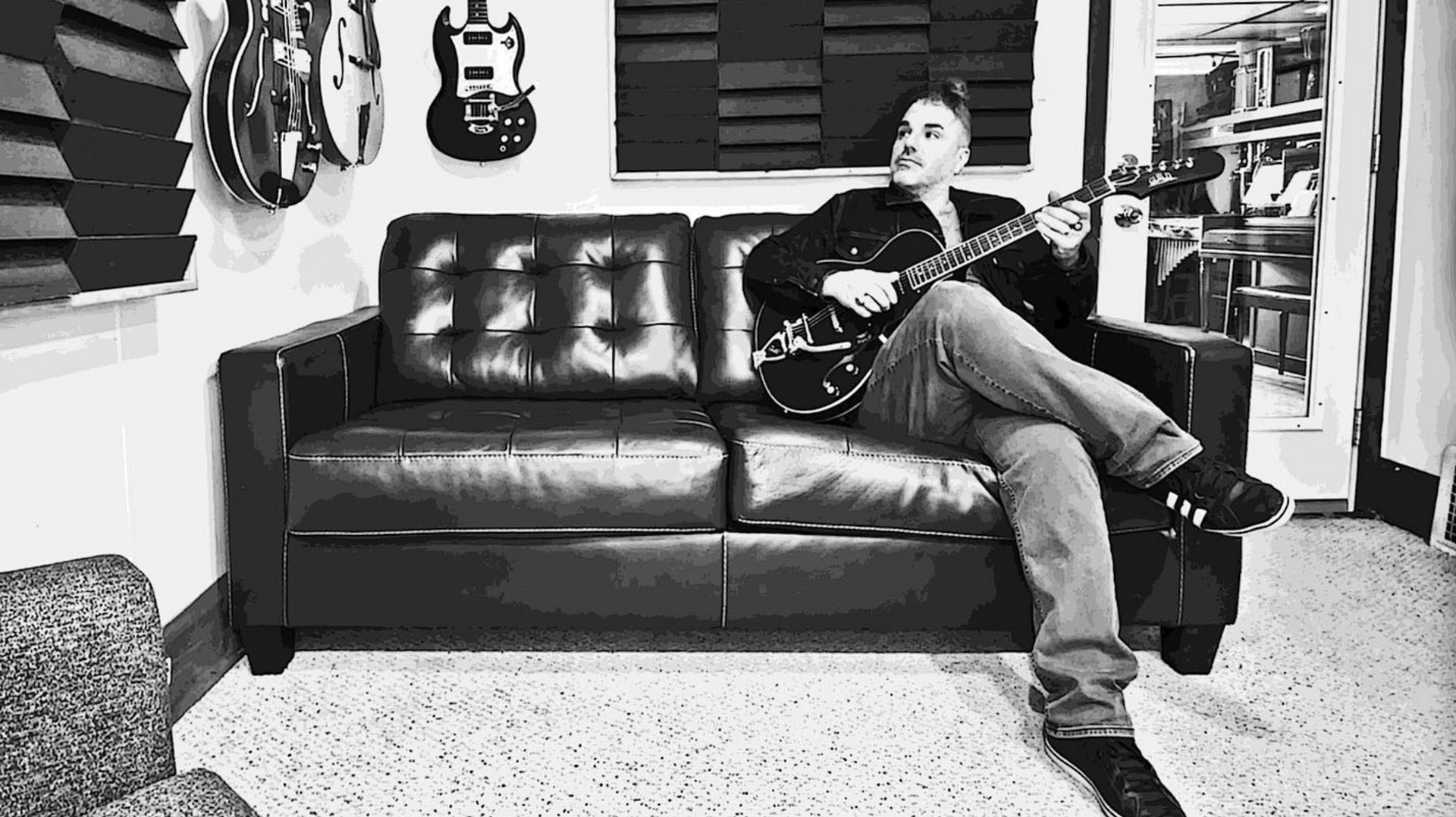
Are you more interested in the sounds of birds? Join Micky Torpedo for a performance of his most recent album, Birdsongs, Vol 1 - Sounds of the Mississippi Flyway
. This is an ongoing collaborative project between Micky and Sinnissippi Audubon Society. Their newest album, Volume 2, will be released in Spring of 2024. For this performance, Micky will be joined by Heather Camacho (The Lone Canary) on violin, Karl Ropp on upright bass, and Cade Eastham (Turning Stranger) on percussion. Micky and friends will be performing two sets throughout the day.
Our friends from Rock Valley Garden Center
will also be here with lots of information about how to best set up a winter feeding station for birds, and you’ll be able to make a pinecone bird feeder to take home for your yard or neighborhood! Sinnissippi Audubon
will be present with great information about George and Louise, Rockford’s resident peregrine falcons!
Hoo Haven will be bringing along one of their resident education birds for an up close look at our feathered friends. If you haven’t checked them out, Hoo Haven is a wonderful resource for injured birds, providing rehabilitation and education for birds of all shapes and sizes.
Finally, Collins Aerospace will be here talking about the physics of flight, how the planes you see flying take inspiration from birds, and getting youth excited in the aerospace industry that happens right in our backyard! You’ll learn all about Bernoulli’s principle, match bird wings and plane wings, and even test out your own paper airplane against some real aerospace and mechanical engineers! Harin Patel, a mechanical engineer at Collins Aerospace and a huge asset in the grant that Severson Dells received to put on these Science Saturdays says of the event, “Collins Aerospace will be partnering with Severson Dells to teach students the Physics of Flight! We are extremely excited to teach students how flight works and apply these concepts to airplanes!”
We hope to see you fly on over to Severson Dells for our Bird Bonanza. As you can see, there is something for every member of your flock to engage in. Bird Bonanza happens December 2, 2023 from 10am-2pm at 8786 Montague Road in Rockford, IL. If you have any questions, please reach out to Liz Wiener, Public Programs Coordinator at liz@seversondells.org
or call 815-335-2915.
RECENT ARTICLES